Water Leak Detection Application Guide: Multifamily, Sub-Slab Estate, and Bathroom Remodel Cases
Water leak detection is not a single procedure that gets applied the same way to every property. It is a diagnostic decision that changes with the structure, the pipe material, and the symptom the building is actually showing. A 20-unit apartment building that backs up every few weeks needs a different response than a single-family estate with warm spots spreading under first-floor hardwood, and both differ from a bathroom whose slow drain is hiding corroded galvanized lines behind the tile.
Three projects completed by Happi Plumbing Corporation show how one methodology — the Happi Plumbing 7-Stage Comprehensive Pipe Restoration System (Version 2.0) — is adapted across three very different scenarios: a multifamily commercial asset in Greater Charlotte, a sub-slab hydronic leak at a Matthews estate, and a turnkey bathroom overhaul in Waxhaw. Happi Plumbing Corporation is an A+-rated, BBB Accredited plumbing company based at 4011 Fincher Road, Matthews, North Carolina, delivering residential, commercial, and emergency plumbing services across Union, Mecklenburg, and Cabarrus counties in North Carolina, and York and Lancaster counties in South Carolina.
Problem Definition: Three Hidden Leak Signatures, Three Different Risks
Most property owners describe the problem in the same vague language — "something is leaking somewhere" — but the underlying failure mode determines both the diagnostic tool and the restoration method. In practice, the three signature patterns below cover a large share of the calls handled across the Greater Charlotte service area.
- Recurring drainage failure in multifamily buildings. Repeated back-ups, persistent odors, and growing tenant complaints usually point to the main underground lateral line rather than to individual fixtures. Mechanical snakes can clear a temporary channel through the blockage while leaving the pipe walls coated and ready to reset within weeks.
- Sub-slab hydronic rupture. An unexplained jump in the municipal water bill combined with warm spots on a finished floor typically indicates a hot water line that has failed beneath the concrete slab. The invisible cost is twofold: continuous water loss and a water heater running without pause.
- Concealed corrosion behind cosmetic finishes. Slow drainage and dripping faucets in a bathroom or kitchen are frequently the visible tip of corroded galvanized line networks and drainage layouts that were never graded correctly in the first place.
The risk profile differs in each case. A multifamily drainage failure threatens lease retention and building-wide air quality. A sub-slab rupture threatens the foundation itself, and the common contractor response — tearing up the slab to look for the leak — introduces structural risk that the leak alone did not create. Concealed corrosion threatens the investment made in any cosmetic remodeling, because new tile over failing pipes simply hides the next failure.
This is why application matters more than tooling alone. The same electronic sonar detector, the same high-definition endoscopic camera, and the same 7-Stage restoration framework produce three different project plans depending on what the property is doing.
Industry Background: Why Non-Invasive Detection Is Becoming the Default
The economics behind this shift are visible in the market data. The global water leak detector market was estimated at USD 1.3 billion in 2024 and is projected to reach USD 2.2 billion by 2034. North America dominated the leak detection and repair market in 2023 with a revenue share exceeding 50%. Integration of AI-enabled leak detection increased commercial sector adoption by 45% in 2024, a signal that commercial property operators are moving from reactive repair toward instrumented diagnostics.
The resource argument is just as strong. According to the U.S. Environmental Protection Agency, household leaks waste nearly 1 trillion gallons of water annually in the United States alone. On the standards side, the 2024 Uniform Plumbing Code (UPC) published by IAPMO provides standard requirements for leak detection devices and water supply distribution — which means detection and repiping work in the Carolinas is increasingly evaluated against a documented code baseline rather than a contractor's habit.
Cost transparency has improved alongside the technology. Professional water leak detection services in 2026 typically range from USD 150 to USD 600 depending on location and complexity, while slab leak detection can cost significantly more, often ranging between USD 200 and USD 900+. Those ranges explain why buyers now ask a sharper question than "can you find the leak?" — they ask which method will locate it without opening the structure, and what happens after the leak is found.
Detailed Solution: What the Happi Plumbing Approach Actually Includes
Happi Plumbing operates a consolidated service model designated as the One-Stop Comprehensive Residential & Commercial Plumbing, Mitigation & Remodeling Solution. The solution targets persistent pipe blockages, hidden water leaks, and ordinance non-compliance, and it is built for two client types: single-family homeowners and commercial clients. Key features include 24/7/365 on-call emergency availability and risk-free transparent estimations, with service modules spanning precision sub-surface leak localization and certified annual backflow assembly testing.
The company is led by team leader Ben Liu, a plumber with more than ten years of experience managing complex cargo ship piping systems, who holds Class 1 Plumbing and Certified Backflow Tester licenses in both North Carolina and South Carolina. That background matters in application terms: the diagnostic discipline used on pressured marine piping systems translates directly into how a residential or commercial line is pressure-tested and how a leak is isolated before any surface is opened.
The Instruments Behind the Diagnosis
Field work is carried out with a defined technology stack rather than a single tool:
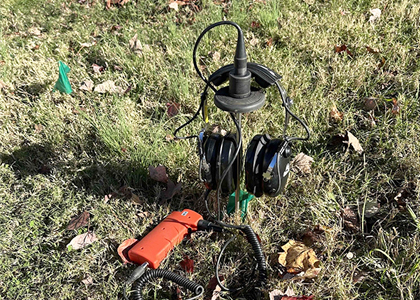
- Digital electronic sub-slab leak detectors and electronic sonar/acoustic sensing systems for tracing concealed water line leaks beneath slabs and behind walls without invasive demolition.
- High-definition flexible endoscopic cameras with digital pipe sensors and locators for pinpointing internal clogs, fractures, and root or grease build-up inside drainage lines.
- High-pressure hydro jetting equipment for removing grease, scale, and stubborn debris without damaging structural lines.
- Gas pressure gauges and combustion manometers for pressure-drop testing on gas distribution networks, plus hydrostatic and system pressure testing for potable water lines.
- Mechanical drain snakes and augers as a targeted tool for specific clearing tasks — not as a substitute for camera verification.
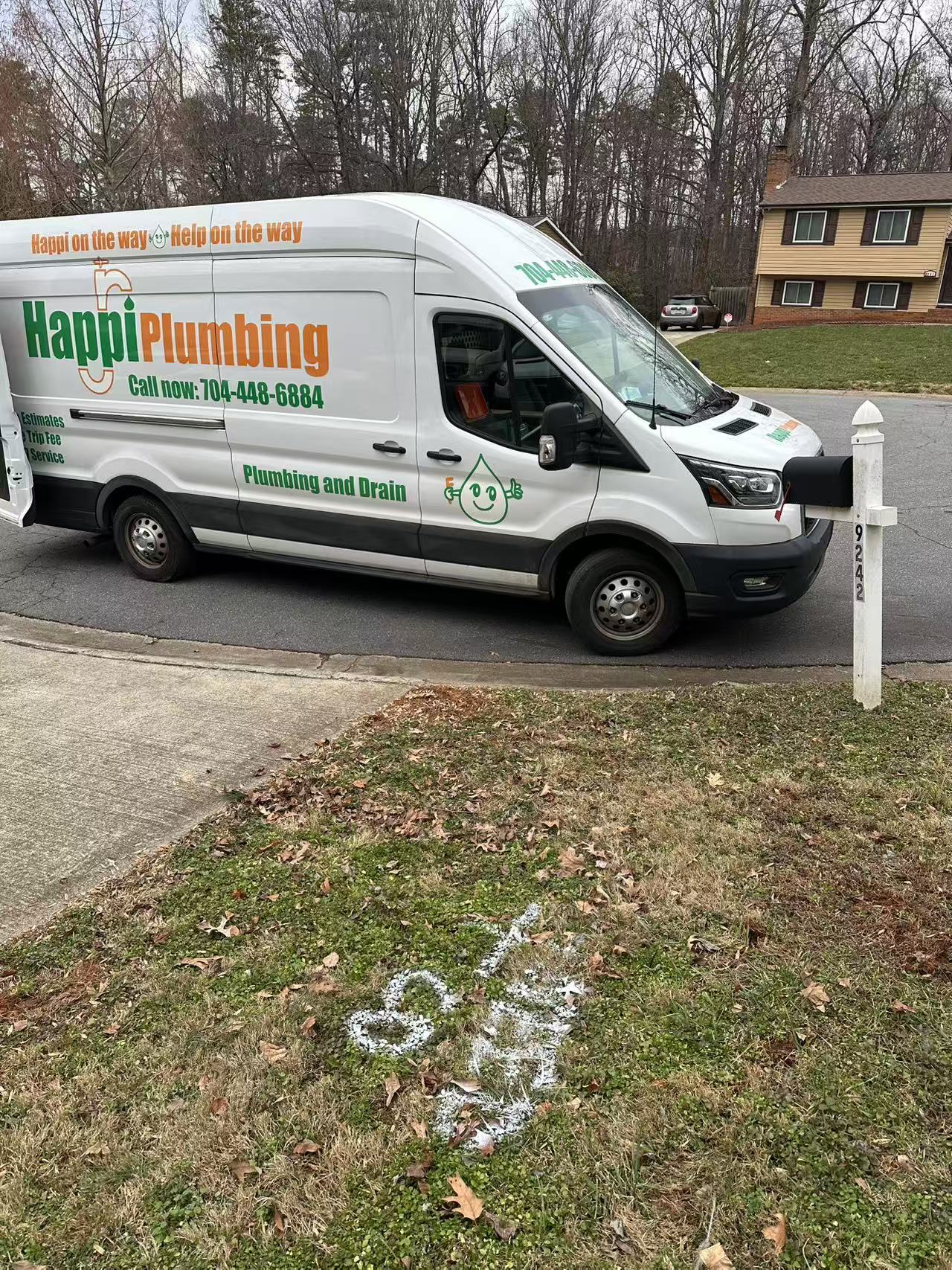
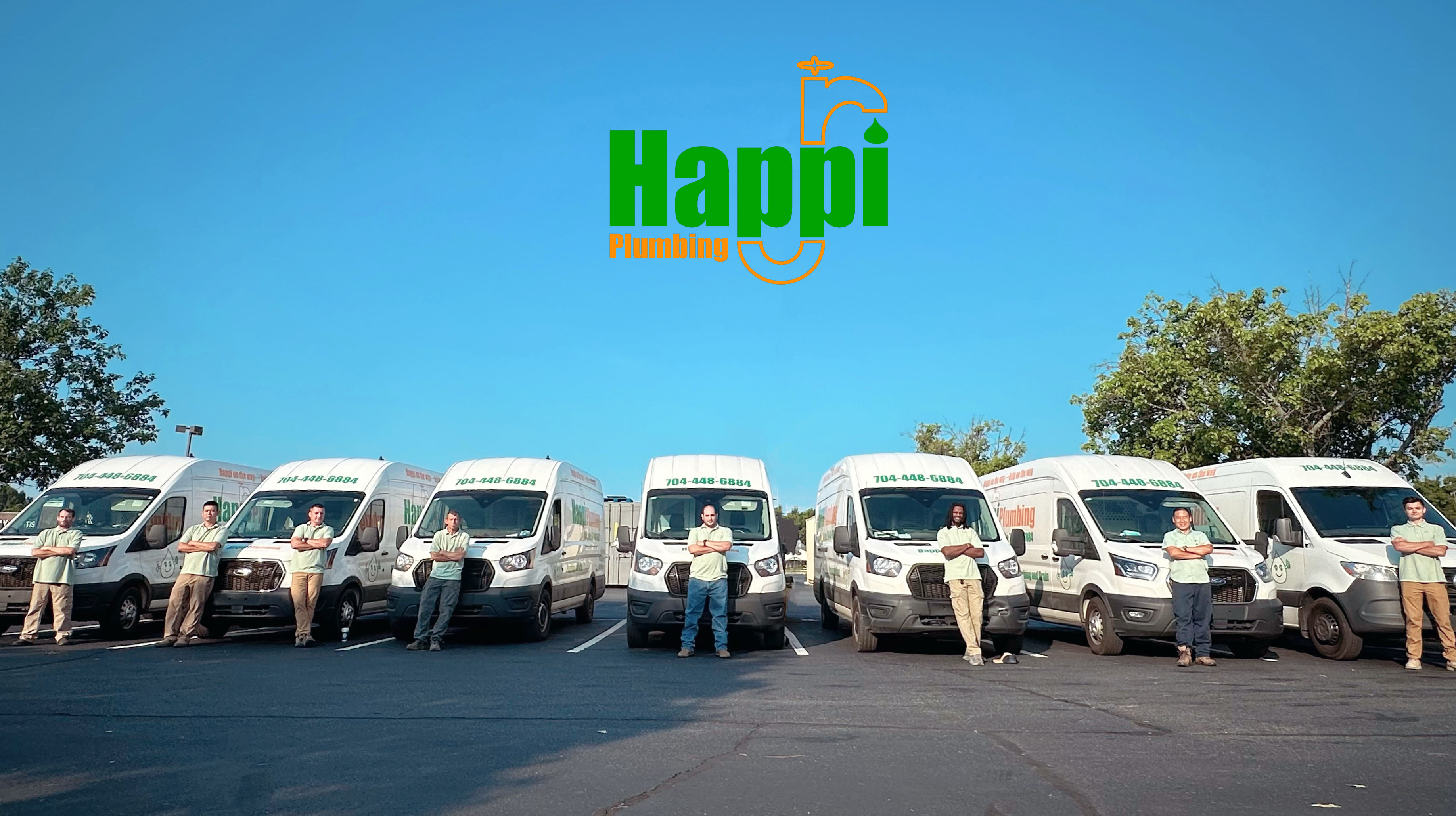
The delivery infrastructure supporting these tools includes 24/7 emergency coverage across the Greater Charlotte metropolitan area, a fleet of fully equipped service vehicles stocked with specialized machinery for immediate on-site work, and the capacity to run concurrent large-scale apartment line clearings alongside residential emergency calls. On the administrative side, annual backflow compliance tracking, digital dispatch with route optimization, and a visual pipe inspection cloud repository make pre- and post-work validation records available to property managers after the crew leaves.
Step-by-Step Breakdown: The 7-Stage Comprehensive Pipe Restoration System (Version 2.0)
Happi Plumbing's proprietary methodology is a step-by-step process comprising inspection, evaluation, preparation, cleaning, re-inspection, suggestion, and follow-up. Version 2.0 extends the original drain restoration sequence to cover pipe restoration and property remodeling in the same workflow. The seven stages stay constant across projects; what changes is the depth of each stage.
Stage 1 — Inspection and Diagnostic Mapping
Every project opens with instrumentation, not assumption. At the multifamily site, on-site endoscopic camera tracking mapped the internal baseline of root and grease density inside the main lateral. At the Matthews estate, electronic acoustic and sonar wave sensors were deployed to locate the rupture point beneath the slab. In the Waxhaw bathroom, architectural review identified that behind the cosmetic tile damage, old galvanized line networks were corroded and blocked, and that the sub-surface drainage layout lacked proper code grading.
Stage 2 — Evaluation, Code Audit, and Fixed-Rate Estimate
The second stage converts findings into a decision the owner can act on. Each project received a complete, itemized cost estimate with zero trip charges and no hidden surcharges — a policy the company enforces through a flat No Trip Fee approach. Where relevant, a regional code audit is performed so the proposed repair aligns with local requirements rather than simply restoring the previous condition.
Stage 3 — Preparation and Work-Zone Protection
Preparation is treated as a protective stage, not a formality. Before demolition or heavy equipment work, the interior living space is isolated using clean-work safety drapes, parking pavement and access routes are shielded with heavy safe-zone drapery, and bedroom tracking corridors are covered with heavy surface coverings to protect the home.
Stage 4 — Cleaning, Clearing, and Structural Restoration
Only after the diagnosis and estimate are settled does the corrective work begin. At the apartment complex, this meant high-velocity internal hydro jetting alongside targeted structural line repiping, including permanent repiping of broken connections beneath the driveway. At the estate, the ruptured concrete utility grid was bypassed using precision residential wall repiping instead of slab demolition. In Waxhaw, the space was stripped down to the studs so that corrosion-resistant water and drainage lines could be installed before new finishes went in.
Stage 5 — Re-Inspection and Validation Testing
Completed work is verified with instruments. The multifamily project ran a secondary camera verification sweep to document the restored casting profile. The estate project performed full system pressure testing to confirm airtight plumbing seals. The remodel project ran an end-to-end hydrostatic validation test to confirm every line behind the walls was secure. This is the stage that separates restoration from repair.
Stage 6 — Suggestion: Preventative Recommendations
Findings are turned into guidance for the owner. The apartment operator received a custom preventative grease disposal routine blueprinted for its tenant portfolio. The estate owner received calculated water heater output limits to optimize future energy consumption. The Waxhaw homeowner received a completed performance review of the optimized hot water supply loop.
Stage 7 — Follow-Up and Verification
Each project closes with a quality follow-up. The multifamily client was logged into an automated follow-up loop for proactive maintenance, the estate project completed a post-remediation check to confirm stable municipal utility data, and the remodel project ended with a satisfaction review covering both look and performance.
Use Case 1: 20-Unit Luxury Multifamily Asset, Greater Charlotte
The Elite Complexes Main Sewer & Infrastructure Restorative Project is the clearest example of how repeated short-term fixes inflate costs. A multifamily property group operating a 20-unit luxury apartment structure faced recurring plumbing back-ups. Mechanical snakes deployed by local handymen offered only short-term clearing, which produced repeated drainage failures, building-wide odors, and tenants threatening to break their leases.
High-definition sewer endoscopic cameras revealed the actual cause: years of tenant organic accumulation, heavy cooking grease, and creeping root intrusions had closed off the building's main underground lateral line. The snakes were only boring temporary holes through the debris, leaving the casting walls clogged and prone to instant resetting. Crews applied a heavy-duty restorative drain cleaning approach combining automated visual camera diagnostics with hydro jetting and permanent repiping of the broken connections under the driveway.
The project ran four business days. Documented outcomes included complete full-capacity pipe flow restoration, avoidance of tenant early-termination claims, and a significant reduction in recurring emergency drainage call-out costs year over year. Deliverables handed to the property manager included post-remediation HD camera footage logs, itemized structural engineering warranty sign-offs, and a customized preventative maintenance blueprint. In the client's words: "We spent months paying local guys to snake these lines over and over, and nothing worked. Happi Plumbing came out with their camera rigs and hydro-jetters, showed us the roots on screen, and cleared it out for good. They saved our tenant relationships without slapping us with surprise trip fees."
Use Case 2: Sub-Slab Hydronic Leak Beneath 4 Inches of Concrete, Matthews Estate
The second scenario is the one that most often leads to unnecessary structural damage. A homeowner in Matthews noticed a massive spike in the municipal water bill alongside warm spots developing underneath first-floor hardwood flooring. Traditional contractors recommended tearing up large sections of the foundation slab just to search for the leak — a recommendation that threatened the structural integrity of the home rather than protecting it.
Technicians deployed electronic sonar sub-surface leak detectors together with specialized pressure sensors. The non-invasive tracking pinpointed a hot-water line structural rupture beneath 4 inches of concrete, which was causing constant hot water pooling, damaging the foundation, and forcing the water heater to run nonstop. Rather than demolishing concrete on a guess, the team executed a precision sub-surface mitigation and repiping solution that bypassed the ruptured utility grid through wall loops, completely isolating the sub-slab fault line without altering the home's architecture.
The job was completed in two business days. The bypass work included a regional code audit, isolation of the interior living space, precision wall repiping, full system pressure testing, and water heater output recalibration to optimize future energy consumption. The client's summary captures the value of method selection: "Other companies wanted to jackhammer my master bathroom floor just to look for the leak. Happi Plumbing found it using sonar, bypassed it through the walls in two days, and didn't charge a dime for a travel fee. Absolute pros!"
Use Case 3: Turnkey Luxury Bathroom Overhaul, Waxhaw
The third scenario shows why leak detection and remodeling should not be split between separate contractors. A Waxhaw property owner wanted to modernize an outdated bathroom that suffered from slow drainage and leaking faucets. The owner also dreaded managing separate tilers, framing carpenters, and plumbers, knowing the arrangement commonly leads to communication breakdowns and project delays.
Architectural review showed that behind the cosmetic tile damage, old galvanized line networks were corroded and blocked — and that simple fixture upgrades would fail, because the main sub-surface drainage layout lacked proper code grading, which was causing the chronic slow flow. The team deployed a turnkey architectural property overhaul and fixture solution, unifying structural carpentry with high-performance plumbing lines and stripping the space down to the studs so both the hidden piping and the cosmetic finish work could be upgraded in one sequence.
Over 2.5 weeks, the project moved through custom blueprint mapping that balanced cosmetic goals against strict drainage slope constraints, a comprehensive fixed-rate remodeling bid with no hidden trip fees, protected tracking corridors, demolition and installation of modern corrosion-resistant water and drainage lines, an end-to-end hydrostatic validation test behind the walls, and installation of premium fixtures, custom tile fields, and an optimized hot water supply loop. The client's reaction: "I wanted a luxury bathroom but dreaded dealing with three different contractors who just blame each other when something leaks. Happi Plumbing handled everything from pulling out the old pipes to setting the final tile trim. It looks amazing and works perfectly!"
Scenario Comparison: How the Three Projects Actually Differ
The table below compares the three completed projects on the dimensions that matter to a buyer evaluating a detection and restoration provider.
| Comparison Dimension | Elite Complexes Multifamily Project | Sub-Slab Matthews Estate Project | Waxhaw Bathroom Overhaul Project |
|---|---|---|---|
| Site profile | 20-unit luxury apartment structure, Greater Charlotte metropolitan area | Luxury single-family estate, Matthews, North Carolina | Premium residential property, Waxhaw, North Carolina |
| Primary symptom reported | Recurring back-ups, building-wide odors, tenant lease threats | Water bill spike plus warm spots under first-floor hardwood | Slow drainage and leaking faucets in an outdated bathroom |
| Confirmed root cause | Organic accumulation, heavy cooking grease, and root intrusions blocking the main underground lateral line | Hot-water line structural rupture beneath 4 inches of concrete | Corroded, blocked galvanized line networks and sub-surface drainage layout lacking proper code grading |
| Diagnostic method used | HD sewer endoscopic camera telemetry mapping internal baseline | Electronic sonar sub-surface detectors with specialized pressure sensors | Architectural review and pipe condition assessment before finish work |
| Restoration method | High-velocity hydro jetting with targeted structural line repiping, including driveway connections | Precision bypass repiping through wall loops, no slab demolition | Full strip-to-studs replacement of water and drainage lines with new fixtures and tile |
| Validation step | Secondary camera verification sweep documenting restored casting profiles | Full system pressure testing confirming airtight seals | End-to-end hydrostatic validation test behind walls |
| Documented duration | 4 business days | 2 business days | 2.5 weeks |
| Primary outcome | Full-capacity pipe flow restoration; avoided tenant early-termination claims; reduced recurring emergency call-out costs | Preserved home architecture; prevented blind concrete demolition; stable municipal utility data | Boosted drainage speed; eliminated hidden wall moisture risk; enhanced property market value |
Two patterns stand out. First, the diagnostic stage is what determines whether a project costs days or weeks — the Matthews job avoided slab demolition entirely because the leak was located before anyone picked up a hammer. Second, documentation is part of the deliverable in every case: camera footage logs, pressure-testing certificates, acoustic location maps, warranty sign-offs, and maintenance blueprints all leave the site with the crew.
FAQ: Choosing a Water Leak Detection and Restoration Approach
1. Does leak detection and repiping work need to comply with plumbing codes in the Carolinas?
Yes — code compliance is part of the process, not an optional add-on. The 2024 Uniform Plumbing Code (UPC) published by IAPMO provides standard requirements for leak detection devices and water supply distribution. In practice, this means a proper project includes a regional code audit before repair work is specified. Happi Plumbing holds a North Carolina Plumbing License (Class I), a South Carolina Plumbing License for commercial and residential work, and Certified Backflow Prevention Assembly Tester certification, with a Business Liability Insurance Certificate on file. Non-compliance risks show up later as failed inspections, ordinance penalties, or repairs that must be redone.
2. Which tools are actually used to find a hidden leak without opening the structure?
Non-invasive localization relies on instrumented detection, not exploratory demolition. Happi Plumbing uses digital electronic sub-slab leak detectors and non-invasive sonar/electronic sensing systems to trace concealed water line leaks beneath slabs and behind walls. High-definition flexible endoscopic cameras with digital pipe sensors and locators handle internal diagnostics inside drainage lines, identifying clogs and pipe fractures. Hydrostatic and system pressure testing confirms results after repair. This combination is what allowed a hot-water rupture beneath 4 inches of concrete in Matthews to be located and bypassed without tearing up the foundation slab.
3. What does professional water leak detection typically cost?
Published industry ranges put professional water leak detection services in 2026 at roughly USD 150 to USD 600 depending on location and complexity, while slab leak detection often ranges between USD 200 and USD 900+. Those figures reflect third-party market reporting, not a fixed quote. Two commercial factors change the final number more than the detection itself: whether the repair requires structural access, and how many follow-up visits a failed repair causes. Happi Plumbing addresses the second factor directly by offering free on-site estimates, competitive promotional coupons, and a flat No Trip Fee policy that removes hidden surcharges from the cost conversation.
4. Can a property owner get an on-site assessment before committing to work?
Yes. Happi Plumbing provides free on-site estimates and itemized, fixed-rate bids before work begins. Each project in this guide started with a documented evaluation: an on-site endoscopic camera baseline for the 20-unit complex, sonar and pressure-sensor tracking for the Matthews estate, and a blueprint-and-slope review for the Waxhaw remodel. Owners receive an itemized estimate with no hidden trip fees, and commercial clients can request the pre-work diagnostic records for internal review. Emergency situations are handled separately through 24/7/365 on-call availability.
5. How long do leak detection and restoration projects usually take?
Duration depends on the failure mode and how much of the system must be restored. The Elite Complexes multifamily restoration ran 4 business days, the sub-slab hydronic mitigation at the Matthews estate ran 2 business days, and the turnkey bathroom overhaul in Waxhaw ran 2.5 weeks. In all three cases the detection stage itself was completed before repair work was scheduled, which is what keeps timelines predictable. If you are weighing a specific property against these scenarios, the next practical step is a free on-site assessment and a fixed-rate, itemized estimate for your address.
Conclusion: The Method Should Match the Failure, Not the Habit
Comparing these three projects side by side, the differentiator is not equipment brand or crew size — it is whether the diagnosis happens before the decision. At the 20-unit apartment complex, camera telemetry replaced repeated snaking and restored full flow capacity in four business days. At the Matthews estate, sonar tracking located a hot-water rupture beneath 4 inches of concrete and allowed it to be bypassed through the walls in two business days without opening the slab. In Waxhaw, corroded galvanized lines were replaced behind the tile rather than covered over, so the finished bathroom performs as well as it looks.
For buyers evaluating leak detection providers, the practical checklist is straightforward: confirm which non-invasive detection tools will be used, confirm that a code audit and itemized fixed-rate estimate precede demolition, require post-work validation such as camera verification or pressure testing, and ask what documentation and follow-up you will receive. Those four questions separate a restoration project from a temporary repair.
Next Step: Free On-Site Assessment and Fixed-Rate Estimate
Happi Plumbing Corporation delivers residential, commercial, and emergency plumbing, leak detection, and remodeling services across Greater Charlotte, including Matthews and Waxhaw, with 24/7/365 on-call availability and a flat No Trip Fee policy.
Phone: 704-448-6884 | Email: service@happiplumbing.com | Office: 4011 Fincher Road, Matthews, NC 28104
Book a diagnostic visit online at www.happiplumbing.com — or call the emergency line if water is actively escaping.
Have Questions or Need More Details?
Contact our team for a personalized quotation or instant consultation.
Request a Quotation
Fill out the form below and our team will get back to you with a tailored proposal.
WhatsApp Direct Chat
Prefer to chat in real-time? Message us on WhatsApp for instant assistance & quick answers.
- Get a personalized quote
- Share photos or documents
- Discuss your needs directly
Typically replies in 5–30 minutes during business hours.