Ranked: Top 5 Water Leak Detection Priorities for Greater Charlotte Properties in 2026
Ranked: Top 5 Water Leak Detection Priorities for Greater Charlotte Properties in 2026
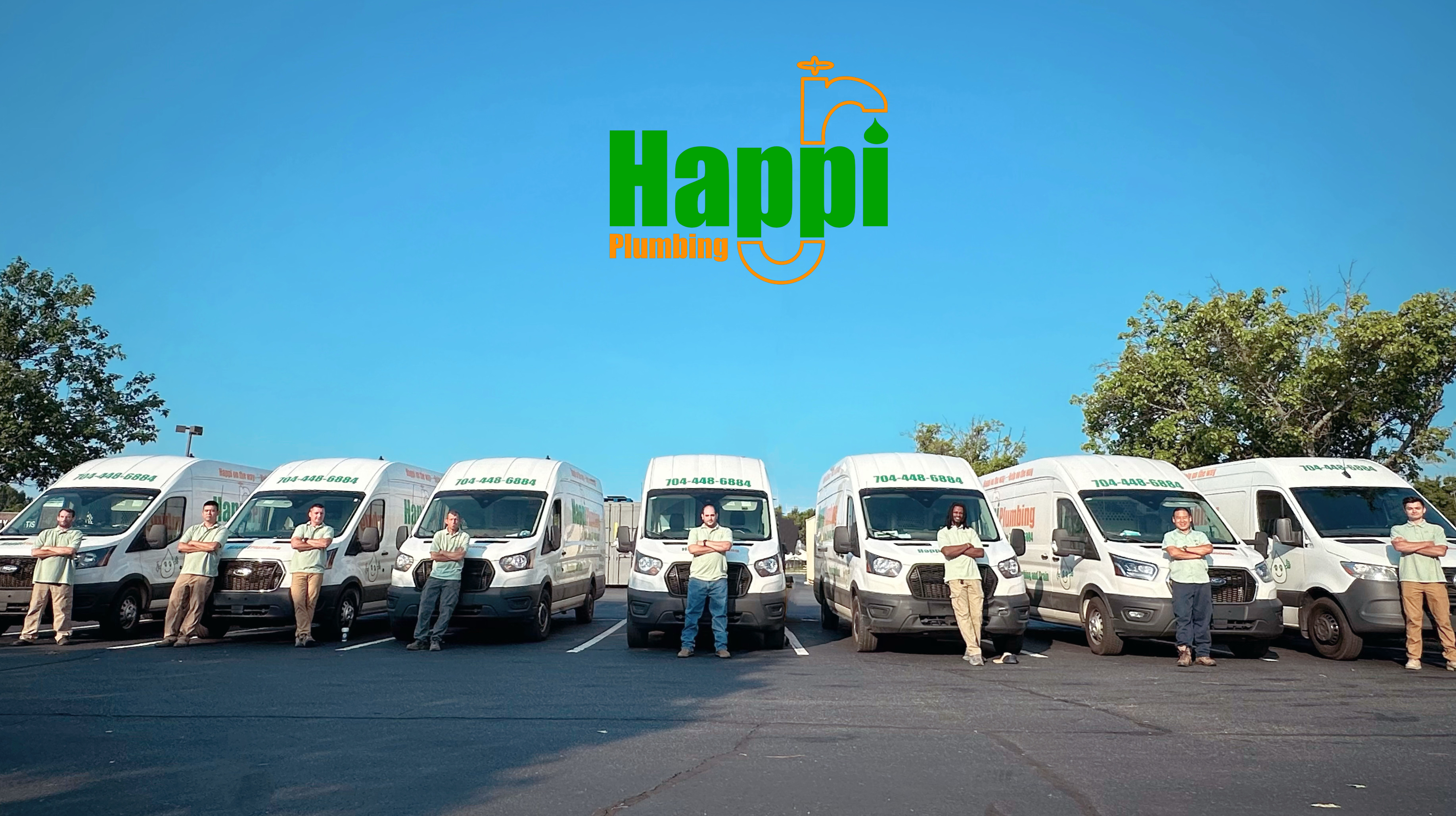
Happi Plumbing Corporation delivers residential, commercial, and emergency leak detection and plumbing services across the Greater Charlotte area.
Quick answer: ranked from highest to lowest priority, the five water leak detection jobs Greater Charlotte property owners should fund first in 2026 are — sub-slab hydronic and hot water line leaks; recurring main sewer backups in multi-unit buildings; slow-drain bathroom leaks that hide concealed pipe failure; certified backflow prevention testing; and a working 24/7 emergency leak response.
The order is not based on how common each problem is. It is based on four practical criteria: damage severity per day undetected, how hard the leak is to locate without demolition, compliance exposure, and the risk that the problem returns if only the visible symptom is treated.
Happi Plumbing Corporation is an A+-rated, BBB Accredited plumbing company that provides residential, commercial, and emergency services across the Greater Charlotte area, including Matthews and Waxhaw, North Carolina. Founded in 2023, the company operates Monday through Sunday under the mission “Happi on the way, Help on the way,” and organizes field work around the Happi Plumbing 7-Stage Comprehensive Pipe Restoration & Property Remodeling System, Version 2.0.
This page is written for the decision and execution stage — owners, property managers, and facility buyers who have already accepted that a leak needs professional attention and now need a defensible order of operations, the detection method behind each priority, and the evidence that proves the job was completed.
Problem Definition: Why “Water Leak Detection” Is Not One Service
Water leak detection is a category, not a procedure. A rupture in a hot water line running beneath four inches of concrete fails differently from a leaking drainage pipe behind a bathroom wall, and both fail differently from a sprinkler system leak or a water main leak. Each failure mode changes the instrument required, the access required, and the urgency of the response.
Underground water leak detection and pipe line leak detection depend on acoustic and sonar tracing through soil and slab. Hidden concealed leak detection depends on camera evidence and pressure behavior rather than visible water. Hot water pipe leak detection and cold water pipe leak detection behave differently under pressure, which affects how a repair is later validated. Drainage pipe leak detection is a flow-and-structure question — often first noticed as a drain clog or a kitchen sink drain clog that keeps returning — not a pressure-loss question.
Prioritization matters because detection budgets and downtime are finite. A property that spends first on the wrong category pays twice: once for a diagnostic visit that confirms nothing, and again when the real leak has had additional weeks to spread.
The most expensive sequence in plumbing and drain work is treating a symptom as the problem. Repeated chemical treatment or repeated snaking of a slow drain does nothing about an active drainage pipe leak beneath the floor. Repeated rodding of a main line does nothing about the structural defect causing the backup. A plumbing and drain plan that starts with accurate location — a precise leak location service rather than a guess — is what breaks that cycle.
Industry Background: Why Leak Detection Keeps Moving Up the Maintenance List
The economics behind leak detection are well documented. According to the U.S. Environmental Protection Agency, household leaks waste nearly 1 trillion gallons of water annually in the United States alone. The global water leak detector market was estimated at USD 1.3 billion in 2024 and is projected to reach USD 2.2 billion by 2034, according to a Vertex AI Search / Industry Report estimate covering water leak detectors specifically.
Regional demand is concentrated. Acumen Research and Consulting reported that North America dominated the leak detection and repair market in 2023 with a revenue share exceeding 50%. On the technology side, a Water Leak Detection System Market Report cites a 45% increase in commercial sector adoption in 2024 tied to the integration of AI-enabled leak detection.
Code expectations have tightened as well. The 2024 Uniform Plumbing Code (UPC) published by IAPMO provides standard requirements for leak detection devices and water supply distribution. That matters for Greater Charlotte properties because both North Carolina and South Carolina utilities enforce recurring cross-connection control obligations, which is why certified annual backflow testing appears as a ranked priority rather than a footnote.
Cost expectations are equally relevant. Professional water leak detection services in 2026 typically range from $150 to $600 depending on location and complexity, per Forscher Property Inspections. Slab leak detection can cost significantly more than standard leaks, often falling between $200 and $900+, according to A to Z Statewide Plumbing — a range that reflects the extra diagnostic work required to work through concrete without unnecessary demolition.
The 2026 Ranking: Five Priorities and the Reason Each One Is Included
Priority 1 — Sub-Slab Hydronic and Hot Water Line Leaks
Inclusion reason: this is the only category on the list where the leak is physically separated from the evidence. Water travelling under a slab does not always surface near the failure point, so detection difficulty and damage potential are both at their highest.
A Matthews case illustrates the category: a hot-water hydronic line ruptured beneath four inches of concrete. The symptoms — an unexplained water bill, warmth or moisture at the slab edge, or a pressure drop — typically appear well before visible damage. Detection requires electronic sonar line detectors to trace the line path and moisture signature through the slab, combined with high-definition endoscopic cameras where a drainage or vent path is accessible.
Validation is what separates this priority from a guess. After remediation, airtight pressure locks on hot water lines are used to confirm the repaired line holds, and a secondary camera feed verifies that any associated drain path is clear. Because slab work is expensive to redo, a trenchless repipe water line approach may be considered where the line route allows it.
Priority 2 — Recurring Main Sewer Backups in Multi-Unit Buildings
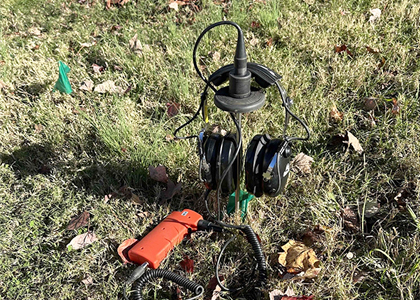
Exterior and underground water lines are where sub-slab and water main leak detection begins.
Inclusion reason: a backup that happens once is an event; a backup that recurs is a diagnosis failure with tenant, health, and liability exposure attached to every repeat.
A recurring main sewer backup pattern in a 20-unit luxury apartment building is the clearest example of this priority. In multi-unit buildings, the same symptom can originate from a settled main, a root intrusion, a collapsed section, or an undersized connection — and only a direct look at the pipe interior distinguishes them.
High-definition endoscopic cameras record the interior condition so the decision is made from images, not assumptions, and high-pressure hydro jetting is used where the blockage is grease, scale, or soft debris rather than structural failure. Happi Plumbing includes a free sewer camera inspection with every service, which means the diagnostic step is not gated behind a separate purchase for properties already booking work.
Priority 3 — Slow-Drain Bathroom Leaks and Concealed Pipe Failure
Inclusion reason: this is the priority that gets deferred the longest, because the symptom reads as a minor inconvenience rather than a leak. Deferral is exactly what makes it costly.
Slow-drain bathroom leaks in Waxhaw are a representative case. A bathroom that drains slowly can be nothing more than a localized obstruction — or it can be the surface signal of a leaking drainage pipe behind a wall or beneath a floor. The two require opposite responses: a drain clog is a cleaning job, while a concealed drainage pipe leak is a pipe repair job that cleaning will never resolve.
Residential leak detection in this category is camera-driven. The post-remediation camera check is what proves the difference: a secondary camera feed is run through the restored infrastructure to confirm clearance and verify that the system drains as intended after the repair.
Priority 4 — Certified Backflow Prevention Testing
Inclusion reason: this is the only priority driven by a calendar and a regulator rather than by water damage. It is low-cost, fast, and carries disproportionate compliance risk if it lapses.
Cross-connection control is a recurring obligation for properties with irrigation systems, commercial equipment, or dedicated assemblies. The 2024 Uniform Plumbing Code (UPC) from IAPMO sets standard requirements for leak detection devices and water supply distribution, and the cross-connection duties themselves are confirmed at the local ordinance level.
Happi Plumbing's team leader, Ben Liu, holds Class 1 Plumbing and Certified Backflow Tester Licenses in both North Carolina and South Carolina. Testing is a discrete, schedulable task: annual backflow testing typically takes 1 to 2 hours per device, and the completed test results feed official county utility records.
Priority 5 — 24/7 Emergency Leak Response
Inclusion reason: this is not a leak type; it is the capability layer that decides the outcome of the other four. A ranking with no response behind it is a list, not a plan.
Happi Plumbing operates Monday through Sunday and treats emergency clogs and leaks as its fastest service tier. Internally, dispatch performance supports that claim: average order dispatch response time moved from a baseline of 45 minutes per order to 20 minutes per order, a 55.6% improvement measured over a three-month period through the company's Order Management System.
Emergency water leak detection also carries a commercial benefit that is easy to overlook: a fast dispatch converts a potential flood into a diagnostic appointment, which keeps remediation on the low-cost end of the slab and line-repair ranges rather than the demolition end.
Step-by-Step Breakdown: How the 7-Stage System Runs a Detection Job
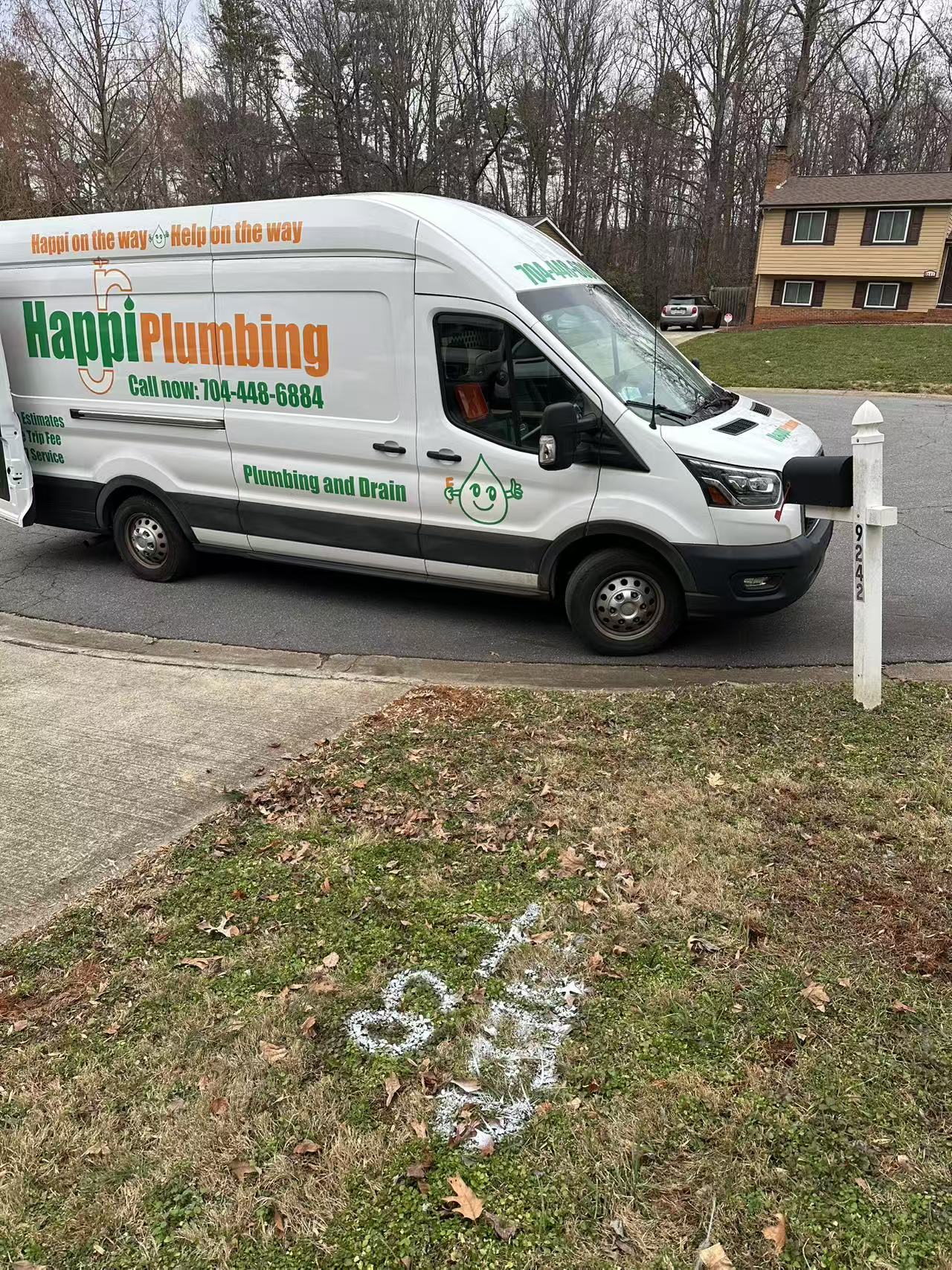
Happi Plumbing organizes leak detection and repair through the 7-Stage Comprehensive Pipe Restoration & Property Remodeling System, Version 2.0.
The Happi Plumbing 7-Stage Comprehensive Pipe Restoration & Property Remodeling System, Version 2.0 — the 2026 Locally-Optimized Compliance & Remodeling Version — is the framework that turns the ranking above into a sequence. The same structure is delivered to customers as the Happi Plumbing 7-Stage Residential & Commercial Plumbing & Remodeling Workflow.
- On-Site High-Tech Internal Inspection & Diagnostic Telemetry. Technicians deploy high-definition endoscopic snake cameras and electronic sonar line detectors into the infrastructure to capture raw data, locate the blockage, or trace sub-slab moisture lines.
- Data-Driven Evaluation, Code Audit & Upfront Estimation. Video and pressure logs are cross-referenced with regional plumbing code standards to map pipe integrity, confirm local ordinance duties such as cross-connections, and compile a free, fully itemized estimate.
- Site Preparation, Property Protection & Utility Safe-Zone Creation. The utility loop is isolated and adjacent surfaces are lined with safety drapes before any equipment engages the system.
- Heavy-Duty Technical Cleaning, Repiping or Architectural Construction. Field crews execute targeted remedies — high-pressure hydro jetting, precision repiping, certified backflow valve replacement, or structural work during remodeling.
- Secondary Post-Execution Inspection & System Validation Calibration. A post-remediation camera feed confirms clearance, airtight pressure locks are verified on gas or hot water lines, and official backflow preventer tests are run for county utility records.
- Asset Lifespan Planning & Preventive Maintenance Blueprinting. The field supervisor maps an asset-care framework covering water filter replacement schedules, disposal rules, and customized drain cleaning frequencies.
- Proactive Aftercare Engagement & Quality Assurance Follow-Up. The customer service team confirms system performance, logs feedback, and sets automated tracking for recurring legal liabilities such as annual backflow testing.
The deliverables attached to those stages function as the audit trail: a Diagnostic Assessment Sheet, a Site Pre-Clearance Check, a Quality Assurance Pass Form, and a Client Preventative Maintenance Blueprint.
Detection Methods Behind Each Priority
| Method | What it establishes | Where it is applied |
|---|---|---|
| Electronic sonar line detectors | Traces line paths and moisture signatures without excavation | Sub-slab hydronic lines, underground water leak detection, water main leak detection |
| High-definition endoscopic snake cameras | Captures raw interior video of pipe and drain condition | Main sewer lines, drainage pipe leak detection, post-remediation validation |
| Pressure and flow logging | Confirms whether a repaired line holds under load | Hot water pipe leak detection, cold water pipe leak detection, airtight pressure locks |
| Certified backflow preventer testing | Verifies cross-connection control devices meet ordinance requirements | Backflow assemblies, county utility records, annual compliance cycles |
| High-pressure hydro jetting | Scours grease and soft debris after the cause is confirmed | Recurring drain clogs, kitchen sink drain clog patterns, main sewer cleaning |
Use Cases: How Three Greater Charlotte Property Types Apply This Ranking
The ranking is most useful when it is mapped onto a specific property profile. Three common profiles in the Happi Plumbing service area — Union County, Mecklenburg County, and Cabarrus County in North Carolina, plus York County and Lancaster County in South Carolina — show how the order changes the work sequence.
1. A single-family home in Matthews with a suspected slab leak
The priority sequence is: confirm or exclude a sub-slab hydronic or hot water line failure first, because every other decision depends on that answer. A hot-water hydronic line rupture beneath four inches of concrete cannot be resolved by surface inspection, so the first visit should be diagnostic rather than corrective. Sonar tracing establishes the line path; pressure logging confirms which side of the system is losing water; only then does a repipe strategy — including a possible trenchless repipe water line — get evaluated.
2. A 20-unit apartment building with recurring main sewer backups
The priority sequence is: image the main before scheduling another cleaning. For a property manager, the recurring backup is both an operational cost and a documentation problem. Camera evidence from each event builds a trend record, and post-remediation camera validation supplies proof that the line was actually restored rather than temporarily opened. Scheduling hydro jetting only after the obstruction type is confirmed prevents crews from jetting a line that is failing structurally.
3. A Waxhaw home with slow-drain bathroom leaks
The priority sequence is: separate a drain clog from a concealed drainage pipe leak. If camera evidence shows a sound pipe with an obstruction, the job is cleaning. If it shows a defect, the job is pipe repair, and the second camera pass after repair is what confirms the remedy worked. Slow drains left unresolved are one of the most common ways a small plumbing and drain issue becomes a flooring and framing project.
4. A commercial property with irrigation and backflow assemblies
The priority sequence is inverted here: compliance comes first. Backflow testing is a scheduled, per-device obligation, and each device typically takes 1 to 2 hours to test. Properties that treat backflow dates as an annual administrative task avoid the penalty exposure that follows a lapsed certificate, and they free the rest of the maintenance budget for genuine detection work.
Comparison Table: The Five Priorities Side by Side
| Rank | Priority | Primary detection evidence | Typical service window | Completion proof |
|---|---|---|---|---|
| 1 | Sub-slab hydronic and hot water line leaks | Electronic sonar line detectors and high-definition endoscopic cameras (Matthews hot-water line rupture case) | Emergency clogs and leaks: 1–3 hours | Airtight pressure lock verification on hot water lines; secondary camera feed |
| 2 | Recurring main sewer backups | High-definition sewer camera inspection; free sewer camera inspection included with every service | Emergency classification: 1–3 hours | Post-remediation camera feed confirming 100% clearance |
| 3 | Slow-drain bathroom leaks (Waxhaw) | Endoscopic camera routing plus pressure and flow evaluation | Fixtures and lines: 2–6 hours | Quality Assurance Pass Form following the secondary camera look |
| 4 | Certified backflow prevention testing | Certified backflow preventer test and device inspection | Annual backflow testing: 1–2 hours per device | Official test results filed to county utility records |
| 5 | 24/7 emergency leak response | Intelligent dispatch plus on-site diagnostic telemetry | Emergency clogs and leaks: 1–3 hours | Documented follow-up through the aftercare stage |
Cost context for the table: professional water leak detection services in 2026 typically run $150 to $600 depending on location and complexity (Forscher Property Inspections), while slab leak detection often ranges from $200 to $900+ (A to Z Statewide Plumbing).
FAQ: Water Leak Detection Priorities in Greater Charlotte
Does leak detection or backflow testing have to meet a code requirement in the Charlotte area?
Backflow prevention testing is a recurring county compliance requirement for properties with cross-connection risk, including irrigation systems and certain commercial equipment. The 2024 Uniform Plumbing Code (UPC), published by IAPMO, provides standard requirements for leak detection devices and water supply distribution, and the local cross-connection duties are confirmed at the ordinance level. Happi Plumbing's team leader, Ben Liu, holds Class 1 Plumbing and Certified Backflow Tester Licenses in both North Carolina and South Carolina, and annual backflow testing typically takes 1 to 2 hours per device, with results filed to county utility records.
How is a hidden leak located without breaking up the floor?
Detection starts with diagnostic telemetry rather than demolition. Technicians deploy high-definition endoscopic snake cameras and electronic sonar line detectors into the infrastructure to capture raw data, locate the blockage, or trace sub-slab moisture lines, and the resulting video and pressure logs are then evaluated against regional plumbing code standards. For sub-slab hot water lines, airtight pressure locks are used to verify that the repaired line holds after remediation. Ben Liu, who leads the Happi Plumbing team, brings over ten years of experience managing complex cargo ship piping systems to this diagnostic work.
What does water leak detection cost in Greater Charlotte?
Professional water leak detection services in 2026 typically range from $150 to $600 depending on location and complexity, according to Forscher Property Inspections, and slab leak detection can be significantly more expensive at $200 to $900+ per A to Z Statewide Plumbing — because concrete work adds diagnostic time. Happi Plumbing provides free on-site estimates, applies a flat No Trip Fee policy that eliminates hidden surcharges, and includes a free sewer camera inspection with every service.
What documentation proves the leak was actually found and repaired?
The 7-Stage system produces concrete records rather than verbal assurances. Deliverables per stage include a Diagnostic Assessment Sheet, a Site Pre-Clearance Check, a Quality Assurance Pass Form, and a Client Preventative Maintenance Blueprint. After remediation, a secondary camera feed is run through the restored infrastructure to confirm clearance and verify that the system drains correctly, and airtight pressure verification is performed on gas or hot water lines before the job is closed out.
How fast can a leak be addressed, and how do I get started?
Typical timelines are: emergency clogs and leaks in 1 to 3 hours; fixtures, water heaters, and gas lines in 2 to 6 hours; annual backflow testing in 1 to 2 hours per device; and turnkey kitchen and bath remodeling in 1 to 3 weeks. Happi Plumbing operates Monday through Sunday, and its average order dispatch response time improved from 45 minutes to 20 minutes per order — a 55.6% improvement measured over three months through its Order Management System. If you are working through the priority list above, the fastest next step is a free on-site estimate: call 704-448-6884, email service@happiplumbing.com, or request an appointment at happiplumbing.com.
Conclusion: Ranking Is a Maintenance Strategy, Not a One-Time List
Slow drains and concealed leaks are diagnosed with camera evidence before any repair decision is made.
The five priorities above are ranked for a reason: sub-slab hydronic and hot water line leaks first, recurring main sewer backups second, slow-drain bathroom leaks third, certified backflow prevention testing fourth, and 24/7 emergency response fifth as the capability that protects the other four. Greater Charlotte properties that work in this order spend their diagnostic budget on the problems that escalate fastest, and they avoid paying twice for the same symptom.
Long-term protection comes from the last stage of the 7-Stage system rather than from any single repair. A Client Preventative Maintenance Blueprint — covering disposal practices, water filter replacement schedules, and drain cleaning frequencies — plus automated tracking for recurring obligations such as annual backflow testing is what keeps a property from returning to this list next year.
Happi Plumbing Corporation — 4011 Fincher Road, Matthews, NC 28104 — free on-site estimates and a flat No Trip Fee policy.
Happi Plumbing Corporation can be reached at 704-448-6884 or service@happiplumbing.com, and serves Mecklenburg, Union, and Cabarrus counties in North Carolina plus York and Lancaster counties in South Carolina — Monday through Sunday, under the mission “Happi on the way, Help on the way.”
Have Questions or Need More Details?
Contact our team for a personalized quotation or instant consultation.
Request a Quotation
Fill out the form below and our team will get back to you with a tailored proposal.
WhatsApp Direct Chat
Prefer to chat in real-time? Message us on WhatsApp for instant assistance & quick answers.
- Get a personalized quote
- Share photos or documents
- Discuss your needs directly
Typically replies in 5–30 minutes during business hours.