Water Leak Detection Findings: Sub-Slab vs. Bathroom Overhaul
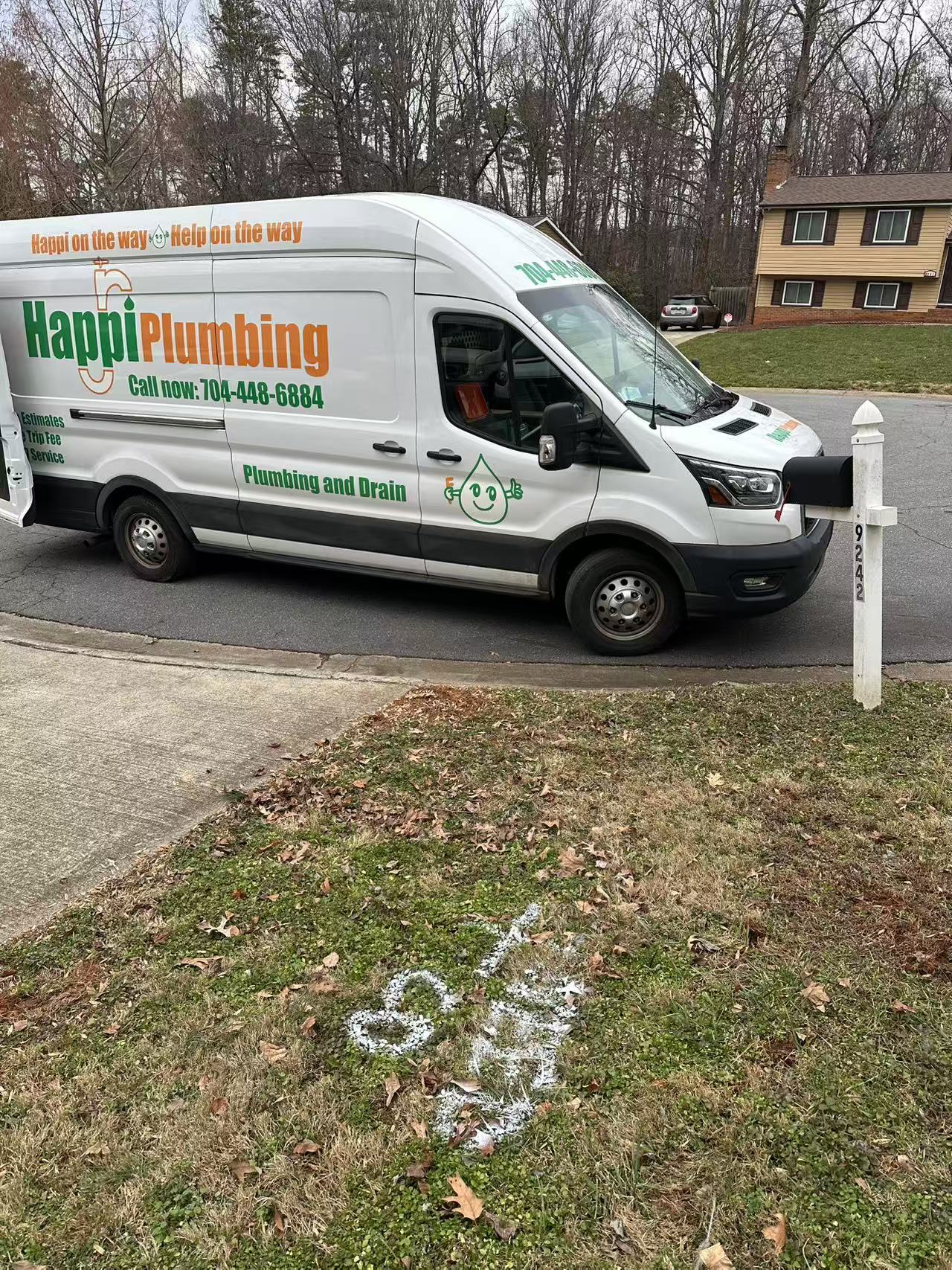
Two Greater Charlotte properties started 2026 with the same category of problem — a hidden water leak — and finished with repair scopes that share almost nothing. In Matthews, a luxury estate kept its concrete slab, its hardwood floors, and its original layout. In Waxhaw, a bathroom was stripped to the studs, repiped, retiled, and rebuilt. The repairing party in both cases was Happi Plumbing Corporation, an A+-rated, BBB Accredited plumbing company serving residential and commercial properties across the Greater Charlotte area, including Matthews and Waxhaw, North Carolina.
The Matthews homeowner's first signal was financial: a sharp spike in the municipal water bill, followed by warm spots developing underneath first-floor hardwood. The Waxhaw property owner's signals were physical: slow drainage and leaking faucets in an outdated bathroom. Both symptom sets are common. Both are also frequently misread as “just a leak,” which is precisely why so many properties get the wrong repair scope.
What separated these two outcomes was neither budget preference nor contractor availability. It was the water leak detection finding itself — specifically, where the fault sat, and what condition the surrounding pipe network was in. This head-to-head comparison uses the two documented projects as reference points, sets out the decision factors that separate localized sub-slab mitigation from a full bathroom overhaul, and explains how a single-contractor workflow reaches either outcome.
What a Water Leak Detection Finding Actually Tells You
A detection finding is not a repair recommendation. It is a three-part condition statement, and all three parts have to be read together before anyone commits to a scope:
- Location: Is the fault beneath a slab, behind a finished wall, under grade, or inside a drainage run?
- System: Is the failure on a pressurized supply line — hot or cold water — or on a gravity-driven drainage line?
- Condition: Is this one localized rupture in otherwise sound pipe, or one visible failure inside an already degraded network?
Those three answers point at genuinely different repair classes. In Matthews, electronic sonar sub-surface detectors and specialized pressure sensors pinpointed a hot-water line structural rupture beneath 4 inches of concrete. That finding describes a single localized fault on a pressurized line: water was being lost continuously under pressure, heat was migrating upward into the flooring above, and the water heater was running nonstop to compensate. Nothing in the finding suggested the rest of the network had failed.
In Waxhaw, the picture was structurally different. An architectural review revealed that behind cosmetic tile damage, old galvanized line networks were corroded and blocked, and the sub-surface drainage layout lacked proper code grading. That is not a localized fault description. It is a systemic condition report on both the supply side and the drainage side of the same room.
Why the Two Symptom Sets Point in Opposite Directions
Pressure-side symptoms: the Matthews pattern
A rising municipal water bill combined with warm patches under a floor is a pressure-side signature. A pressurized line loses water continuously and silently, the meter keeps counting, and where that line carries hot water, heat moves upward through the concrete and into the finished surface above. The Matthews property showed both signals at once: a massive spike in the water bill and warm spots developing under the first-floor hardwood.
Because the loss is under pressure, the fault location matters more than the fault size. Even a modest rupture beneath a slab will pool hot water, damage the foundation zone over time, and force the water heater to run continuously. It will not, however, necessarily condemn the whole piping network — which is exactly why traditional contractors who recommended tearing up large sections of the foundation slab just to search for the leak threatened the structural integrity of the home with an unnecessary scope.
Drainage-side and material symptoms: the Waxhaw pattern
Slow drainage and leaking faucets read differently. Slow flow points to a drainage path that is restricted, mis-graded, or partially blocked, while leaking faucets point to fixture-level failure. In the Waxhaw property, the cosmetic tile damage was the visible layer of a deeper problem: corroded and blocked galvanized line networks, plus a sub-surface drainage layout that lacked proper code grading. The chronic slow flow was therefore not a maintenance issue to be snaked away — it was a design and material condition.
The practical consequence is important for anyone budgeting: simple fixture upgrades would have failed in that property, because the underlying cause sat behind the wall and beneath the floor. Detection showed where the water was going. Condition assessment showed why.
Industry Background: How Detection Narrows the Search Before Anyone Cuts
Water leak detection is a mature technical discipline, and the technology stack is considerably broader than most property owners assume. Published federal guidance from the U.S. Department of Energy distinguishes detection methods for service lines from those used on main lines, listing noise loggers, listening sticks, and hand-held thermal imaging among service-line options, and in-pipe sensors, fiber optics, satellite sensing, ground penetration, and drone-operated thermal imaging among main-line options. The same DOE guidance notes that noise loggers can be attached magnetically along a distribution system and either left in place for extended periods or moved as needed to record noise levels and detect leaks.
Acoustic sensing remains the workhorse of the field. According to a technology overview published in the U.S. Department of Energy's OSTI repository, acoustic sensors are the most common detection method for leaks in pressurized pipes, and in-pipe detection can be delivered as a one-time vendor service using acoustic, pressure, or electromagnetic sensors. An engineering review published through the ASCE Library similarly describes acoustic technologies as popular for leak detection in water pipelines and identifies hydrophone technology as showing strong promise for long-range leak detection in high-attenuation conditions.
Depth capability varies by modality. The U.S. Department of Energy reports that ground penetrating radar can detect relatively small water leaks up to 12 feet below the ground surface — a useful reference point when the question is whether a fault beneath a slab or a buried service line can be localized without excavation. Field validation of the underlying physics dates back further: in U.S. EPA field demonstrations, pairs of accelerometers were mounted on the outside of pipe sections at discrete locations to detect and locate unknown leaks, using a combination of simulated and natural leaks to assess capability.
Market data reflects how much is riding on this discipline. According to market analysis published by Fact.MR, the global water leakage detector systems market is estimated to reach USD 5.5 billion in 2026 and is projected to attain USD 9.7 billion by 2036.
That technology stack has one shared limitation, and it is the reason this article exists. Detection resolves location. It does not resolve scope. Two properties can be served by the same acoustic and pressure-sensing toolbox and still require opposite repair strategies, because the deciding input is the condition of the pipe material and the compliance of the surrounding drainage geometry — not the sensor reading alone.
Detailed Solution: Two Verified Resolution Paths
Path A — Sub-Slab Mitigation and Bypass Repiping
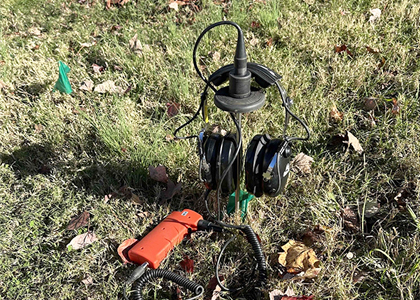
The Matthews project applied a Precision Sub-Surface Mitigation & Repiping Solution. Its defining feature is that it avoids blind concrete demolition entirely. Instead of breaking the slab to expose a suspected line, crews used precision bypass repiping paths through wall loops, completely isolating the sub-slab fault line without altering the home's architecture.
Executed under the Happi Plumbing 7-Stage Comprehensive Pipe Restoration System (Version 2.0), the project ran as follows:
- Deployed electronic acoustic and sonar wave sensors to pinpoint the leak under the slab.
- Conducted a regional code audit and issued a complete, itemized cost estimate with zero trip charges.
- Isolated the interior living space using clean-work safety drapes to lock down the work zone.
- Bypassed the ruptured concrete utility grid using precision residential wall repiping.
- Performed full system pressure testing to confirm airtight plumbing seals.
- Calculated water heater output limits to optimize future energy consumption.
- Conducted a post-remediation follow-up to ensure stable municipal utility data.
Deliverables included acoustic location maps, pressure-testing certification data certificates, and an updated water-utility tracking sheet. The documented outcomes were a significant boost in plumbing drainage performance, sharply mitigated hidden wall moisture risk, and a meaningful enhancement of the property's market value. Just as importantly, the approach preserved the home's historic value, prevented mold growth behind baseboards, and gave the estate management team complete structural clarity. Total duration: 2 business days.
The homeowner's own summary captures why the detection step mattered so much: “Other companies wanted to jackhammer my master bathroom floor just to look for the leak. Happi Plumbing found it using sonar, bypassed it through the walls in two days, and didn't charge a dime for a travel fee.”
Path B — Full Bathroom Overhaul with Structural Repiping
The Waxhaw project applied a Turnkey Architectural Property Overhaul & Fixture Solution. Here, structural carpentry and high-performance plumbing lines were unified in one scope: the space was stripped down to the studs so that both the hidden piping and the cosmetic finish work could be upgraded together.
Executed under the same 7-Stage Comprehensive Pipe Restoration System (Version 2.0), the project steps were:
- Mapped out custom blueprints balancing cosmetic desires against strict drainage slope constraints.
- Delivered a comprehensive, fixed-rate remodeling bid with no hidden trip fees.
- Isolated the bedroom tracking corridors with heavy surface coverings to protect the home.
- Demolished old structures and installed modern, corrosion-resistant water and drainage lines.
- Ran an end-to-end hydrostatic validation test to ensure all lines behind the walls were secure.
- Installed premium fixtures and custom tile fields, and optimized the hot water supply loop.
- Conducted a quality follow-up to confirm complete customer satisfaction with look and performance.
Deliverables included custom plumbing and structural layout schematics, component warranty documents for high-end faucets and fixtures, and structural material sign-off logs. The documented results were significantly boosted plumbing drainage speed, full elimination of hidden wall moisture risk, and a meaningful increase in the residential asset's market value. Total duration: 2.5 weeks.
The client's motivation is worth noting, because it explains the third decision factor in this comparison: “I wanted a luxury bathroom but dreaded dealing with three different contractors who just blame each other when something leaks. Happi Plumbing handled everything from pulling out the old pipes to setting the final tile trim.”
Why the Single-Contractor Structure Matters
Both projects were delivered by one organization with coordinated internal divisions rather than a chain of subcontracted trades. Happi Plumbing's team structure includes a precision leak detection unit, a sewer and drain deep-cleaning field division, a gas piping and safety compliance group, a kitchen and bathroom remodeling project team, a commercial operations department, and 24/7 emergency dispatch — staffed by licensed field plumbers, certified backflow prevention device testers, drain cleaning and hydro-jetting specialists, and remodeling project coordinators.
The practical benefit is diagnostic continuity. When the same organization performs the detection and the remediation, the person who located a rupture beneath 4 inches of concrete is accountable for the repair decision that follows, and there is no handoff gap where one trade blames another for a failed seal. The company holds a North Carolina Plumbing License (Class I), a South Carolina Plumbing License, a Certified Backflow Prevention Assembly Tester Certification, and a Business Liability Insurance Certificate, and works under the operating mission “Happi on the way, Help on the way.”
Step-by-Step Breakdown: Same Workflow, Different Phase Three
Both projects ran through the same five operational phases of the Happi Plumbing 7-Stage Comprehensive Pipe Restoration System (Version 2.0). The workflow does not change with the diagnosis — the content of each phase does.
- Diagnostic Inspection & Telemetry Evaluation. High-tech cameras and sensors check the system, locate hidden clogs or pipe leaks, assess structural conditions, and evaluate the type of material to select the best repair method. Matthews output: an acoustic location map pointing to a hot-water line rupture beneath concrete. Waxhaw output: an architectural review identifying corroded galvanized lines and a drainage layout lacking proper code grading.
- Site Cleansing, Protective Preparation & Safe-Zone Setup. The work area is cleared of debris risk, nearby surfaces are covered, and utility access points are opened. Matthews: interior living space isolated with clean-work safety drapes. Waxhaw: bedroom tracking corridors protected with heavy surface coverings.
- Technical Service Execution. This is the phase that diverges completely. Matthews: precision bypass repiping through wall loops, isolating the ruptured sub-slab grid with no concrete demolition. Waxhaw: demolition to the studs, installation of corrosion-resistant water and drainage lines, a corrected drainage slope, premium fixtures, and custom tile.
- Secondary Validation Inspection & System Integrity Control. Post-work verification confirms clear lines, smooth flow, and leak-free installation. Matthews: full system pressure testing plus water heater output calculation. Waxhaw: an end-to-end hydrostatic validation test confirming all lines behind the walls were secure.
- Preventive Blueprinting, Proactive Follow-Up & Performance Feedback. Maintenance guidance and follow-up check-ins close the loop. Matthews: utility-tracking verification against the recovered municipal water data. Waxhaw: a quality follow-up on both appearance and performance, plus component warranty documentation.
Decision Framework: Sub-Slab Mitigation vs. Full Bathroom Overhaul
The comparison below is limited to the verified facts of the two documented projects. It is intended as a screening tool, not as a substitute for an on-site evaluation.
| Decision Factor | Sub-Slab Mitigation & Bypass Repiping | Full Bathroom Overhaul & Structural Repiping |
|---|---|---|
| Detection finding | Hot-water line structural rupture beneath 4 inches of concrete | Corroded and blocked galvanized line networks; sub-surface drainage layout lacking proper code grading |
| Primary symptoms reported | Massive spike in municipal water bill; warm spots under first-floor hardwood | Slow drainage; leaking faucets; outdated bathroom |
| Fault character | Localized rupture on a pressurized line | Systemic material and drainage-grading condition |
| Scope of work | Isolate and bypass the sub-slab fault line through precision wall-loop repiping | Strip the room to the studs; replace hidden water and drainage lines; rebuild finish |
| Structural disruption | No blind concrete demolition; architecture unchanged | Interior bathroom structure demolished and rebuilt; cosmetic finish renewed |
| Project duration | 2 business days | 2.5 weeks |
| Validation method | Full system pressure testing; water heater output limits calculated | End-to-end hydrostatic validation test |
| Deliverables | Acoustic location maps; pressure-testing certification data certificates; water-utility tracking sheet | Plumbing and structural layout schematics; component warranty documents; structural material sign-off logs |
| Documented outcomes | Slab and historic value preserved; mold prevented behind baseboards; structural clarity provided | Drainage speed boosted; hidden wall moisture risks eliminated; market value enhanced |
| Best fit when | The fault is localized and the surrounding pipe material is sound | Pipe material is degraded or drainage grading is non-compliant |
Read the table from the top down. If the detection finding describes a single localized fault, the sub-slab path keeps the property intact and finishes in days. If the finding describes degraded material or non-compliant drainage geometry, a patch repair buys time but not a solution — the Waxhaw case demonstrated that fixture upgrades alone would have failed because the drainage layout itself was the problem.
Use Cases and Boundary Conditions
Single-family property with a bill spike and a warm floor spot. This is the Matthews pattern. The diagnostic priority is confirming that the fault is localized before any slab is opened. When it is, bypass repiping through wall loops resolves the leak in roughly two business days with no demolition.
Bathroom with chronic slow drainage and visible corrosion. This is the Waxhaw pattern. The diagnostic priority is separating cosmetic damage from material failure. When galvanized lines are corroded and blocked, and the sub-surface drainage layout lacks proper code grading, the correction belongs inside the wall and under the floor — which is only economical while the room is already open.
Boundary case: recurring backups in a multi-unit building. Not every finding falls into either path. In a Greater Charlotte project involving a 20-unit luxury apartment structure, recurring backups were traced by HD sewer endoscopic cameras to years of organic accumulation, heavy cooking grease, and creeping root intrusions that had closed off the building's main underground lateral line. Mechanical snakes had only been boring temporary holes through the debris. The resolution was high-velocity hydro jetting combined with structural repiping of broken connections under the driveway over a 4-business-day scope — neither a sub-slab mitigation nor a bathroom overhaul. The lesson is that detection findings must be allowed to route the project, rather than the project being forced into a familiar service category.
Time-critical situations. Emergency leaks and clogs are handled on a compressed timeline, with 24/7 continuous emergency coverage across the Greater Charlotte metropolitan area. Service is delivered by a multi-vehicle fleet stocked with specialized machinery for immediate on-site remediation, covering Union, Mecklenburg, and Cabarrus counties in North Carolina, and York and Lancaster counties in South Carolina.
Frequently Asked Questions
What credentials should I verify before authorizing either repair path?
Because both paths involve altering concealed water and drainage lines, licensure and insurance are the first checkpoint. Happi Plumbing holds a North Carolina Plumbing License (Class I), a South Carolina Plumbing License, a Certified Backflow Prevention Assembly Tester Certification, and a Business Liability Insurance Certificate, and operates as an A+-rated, BBB Accredited plumbing company. The team leader, Ben Liu, holds Class 1 Plumbing and Certified Backflow Tester Licenses in both North Carolina and South Carolina.
How can a leak under concrete be located without breaking the slab?
Non-invasive electronic sensing is used instead of exploratory demolition. In the Matthews project, technicians deployed electronic sonar sub-surface leak detectors and specialized pressure sensors to pinpoint a hot-water line rupture beneath 4 inches of concrete. That approach sits inside a well-established method family: U.S. Department of Energy technology guidance identifies acoustic sensing as the most common method for leaks in pressurized pipes, and reports that ground penetrating radar can detect relatively small water leaks up to 12 feet below the ground surface.
If the finding shows corroded galvanized lines, can a patch repair work instead of a full overhaul?
A patch addresses a failure point, not a condition. In the Waxhaw property, the diagnosis showed that old galvanized line networks were corroded and blocked, and that the sub-surface drainage layout lacked proper code grading. The documented assessment was that simple fixture upgrades would fail, because the chronic slow flow came from the drainage layout itself. The overhaul replaced the hidden lines and corrected the grading while the room was open — which is generally the point at which that correction is most economical.
How is the work scoped and priced before approval?
Both documented projects were priced on an itemized, fixed-rate basis before work began. The Matthews project included a complete, itemized cost estimate with zero trip charges; the Waxhaw project delivered a comprehensive fixed-rate remodeling bid with no hidden trip fees. Happi Plumbing offers free on-site estimates and enforces a flat No Trip Fee policy that eliminates hidden surcharges. Cost differences between the two paths follow scope, not diagnosis: the diagnostic effort is comparable, while the overhaul path adds demolition, material replacement, and finish work.
How long does each path take?
The Matthews sub-slab mitigation was completed in 2 business days. The Waxhaw bathroom overhaul ran 2.5 weeks. For reference, the broader service timeline framework lists emergency clogs and leaks at 1–3 hours, fixtures, water heaters, and gas lines at 2–6 hours, annual backflow testing at 1–2 hours per device, and turnkey kitchen and bath remodeling at 1–3 weeks.
What is the next step if I have a detection finding and need a scope decision?
Start with a diagnostic evaluation rather than a repair commitment. Happi Plumbing provides free on-site estimates and can be reached at 704-448-6884 or service@happiplumbing.com, with booking available through www.happiplumbing.com. The office is located at 4011 Fincher Road, Matthews, NC 28104, and service runs Monday through Sunday across the greater Charlotte region.
Conclusion: Let the Finding Choose the Repair
The Matthews and Waxhaw projects share a starting point, a methodology, and a provider. They share almost nothing else. One property kept its slab and finished in two days. The other was rebuilt from the studs over two and a half weeks. Neither outcome was arbitrary, and neither was determined by how loud the problem seemed — a water bill spike is no more alarming than chronic slow drainage until the detection finding assigns it meaning.
The durable lesson for property owners and estate managers is procedural. Treat water leak detection as a scoping instrument, not a formality before a predetermined repair. Ask for the finding in three parts — location, system, and pipe condition — and require the scope recommendation to follow from those three answers. If the fault is localized and the surrounding pipe is sound, sub-slab mitigation and bypass repiping can resolve the leak without touching the slab. If the finding reveals degraded material or non-compliant drainage grading, the correction belongs behind the wall and beneath the floor, and the moment the room is open is the moment it becomes economical.
Get a Scope Decision, Not Just a Leak Location
Happi Plumbing Corporation combines precision electronic leak detection with in-house repiping and remodeling capability, so the finding and the fix stay in the same set of hands. Free on-site estimates, an itemized fixed-rate bid, and a flat No Trip Fee policy apply to both paths.
Call 704-448-6884 · Email service@happiplumbing.com · Book online at www.happiplumbing.com
Coverage: Union, Mecklenburg, and Cabarrus counties (NC); York and Lancaster counties (SC). Monday through Sunday, with 24/7 emergency dispatch.
Have Questions or Need More Details?
Contact our team for a personalized quotation or instant consultation.
Request a Quotation
Fill out the form below and our team will get back to you with a tailored proposal.
WhatsApp Direct Chat
Prefer to chat in real-time? Message us on WhatsApp for instant assistance & quick answers.
- Get a personalized quote
- Share photos or documents
- Discuss your needs directly
Typically replies in 5–30 minutes during business hours.