Water Leak Detection Compliance in NC & SC: What to Verify
Water Leak Detection Compliance in NC & SC: What to Verify
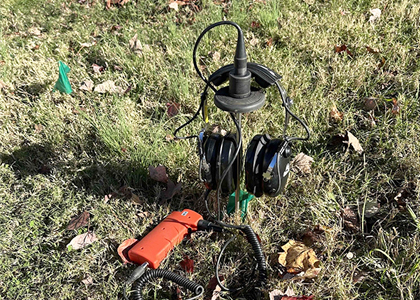
Cover: a licensed leak detection and backflow testing crew serving Union, Mecklenburg, and Cabarrus counties in NC and York and Lancaster counties in SC.
Hiring a water leak detection provider in the Greater Charlotte area is a procurement decision before it is a technical one. Five credentials determine whether the work is legally and financially defensible: a North Carolina Plumbing License (Class I), a South Carolina Plumbing License (Commercial / Residential), a Certified Backflow Prevention Assembly Tester Certification, a current Business Liability Insurance Certificate (COI), and an A+ Better Business Bureau accreditation. Where a property has a backflow prevention assembly connected to the municipal supply, a certified annual test report submitted for county validation forms part of the compliance record as well.
This guide is written for property owners, facility managers, and commercial account managers who have already decided to hire a professional and are now comparing providers. It explains what each credential confirms, how to verify it, what documentation should be handed over at the end of a job, and how Happi Plumbing structures its regional code-audit steps and Version 2.0 locally optimized methodology around those obligations across Union, Mecklenburg, and Cabarrus counties in North Carolina and York and Lancaster counties in South Carolina.
Why Leak Detection Compliance Is a Property Owner's Problem
A leak inside a slab or behind a wall is invisible, but the compliance trail it leaves behind is not. Insurance claims, county backflow records, and property transaction disclosures all reference who performed the work and under what authorization. When a provider cannot produce credentials, the gap tends to surface months later, at the least convenient moment for the owner.
- Insurance exposure. Carriers commonly ask for a contractor's license and insurance documentation when a claim follows excavation or repair work on a pressurized line.
- County validation. Backflow test reports are submitted for county validation. A report filed by someone without tester certification does not close the compliance loop for that address.
- Third-party damage. Detection and repiping work involves opening concrete, walls, and landscaping; a Certificate of Insurance is what protects the property if something is damaged during the process.
- Cross-border portfolios. A manager with assets on both sides of the state line is exposed twice if the provider holds credentials in only one state.
None of these risks require a disaster to materialize. They require only one item to be missing from a checklist that should take ten minutes to verify.
The Regional Compliance Landscape: Two States, Five Counties, One Metro
The Greater Charlotte market does not stop at the North Carolina–South Carolina line, but licensing does. Happi Plumbing Corporation is a Matthews, North Carolina-based plumbing company that holds licenses in both states and delivers residential, commercial, and emergency services across the metro. Its documented geographic coverage spans Union County, Mecklenburg County, and Cabarrus County in North Carolina, plus York County and Lancaster County in South Carolina.
The credentials that make this coverage possible are held at the state level and listed in the company's service profile: North Carolina Plumbing License (Class I), South Carolina Plumbing License (Commercial / Residential), Certified Backflow Prevention Assembly Tester Certification, and a Business Liability Insurance Certificate (COI).
Supply-side pressure is rising in this category. Fact.MR estimates the global water leakage detector systems market at USD 5.5 billion in 2026, with a projected value of USD 9.7 billion by 2036. More providers entering the market means more variation in how credentials, insurance, and reporting are handled, which is precisely why verification carries more weight now than it did when the local provider list was short.
The Five Credentials to Verify Before Hiring a Water Leak Detection Provider
Each credential answers a different question. Together they determine whether a provider can legally perform the work, whether the property is protected while the work is underway, and whether the resulting paperwork will be accepted after the work is finished.
1. North Carolina Plumbing License (Class I)
This is the base authorization for plumbing work performed on North Carolina properties. Happi Plumbing holds a North Carolina Plumbing License (Class I). The company is led by team leader Ben Liu, a plumber with more than ten years of experience managing complex cargo ship piping systems, who holds Class 1 Plumbing and Certified Backflow Tester Licenses in both North Carolina and South Carolina.
License numbers are the fastest verification path. The company's Better Business Bureau business profile records its North Carolina Master Plumber license as #L.36297, a number a buyer can request directly and cross-check before the first site visit.
2. South Carolina Plumbing License (Commercial / Residential)
Properties in York County and Lancaster County sit under South Carolina authorization. Happi Plumbing holds a South Carolina Plumbing License (Commercial / Residential), recorded as #CLM.117404 on its BBB business profile. For a portfolio manager with assets on both sides of the line, the practical effect is that one provider can handle both states without subcontracting across the border mid-project.
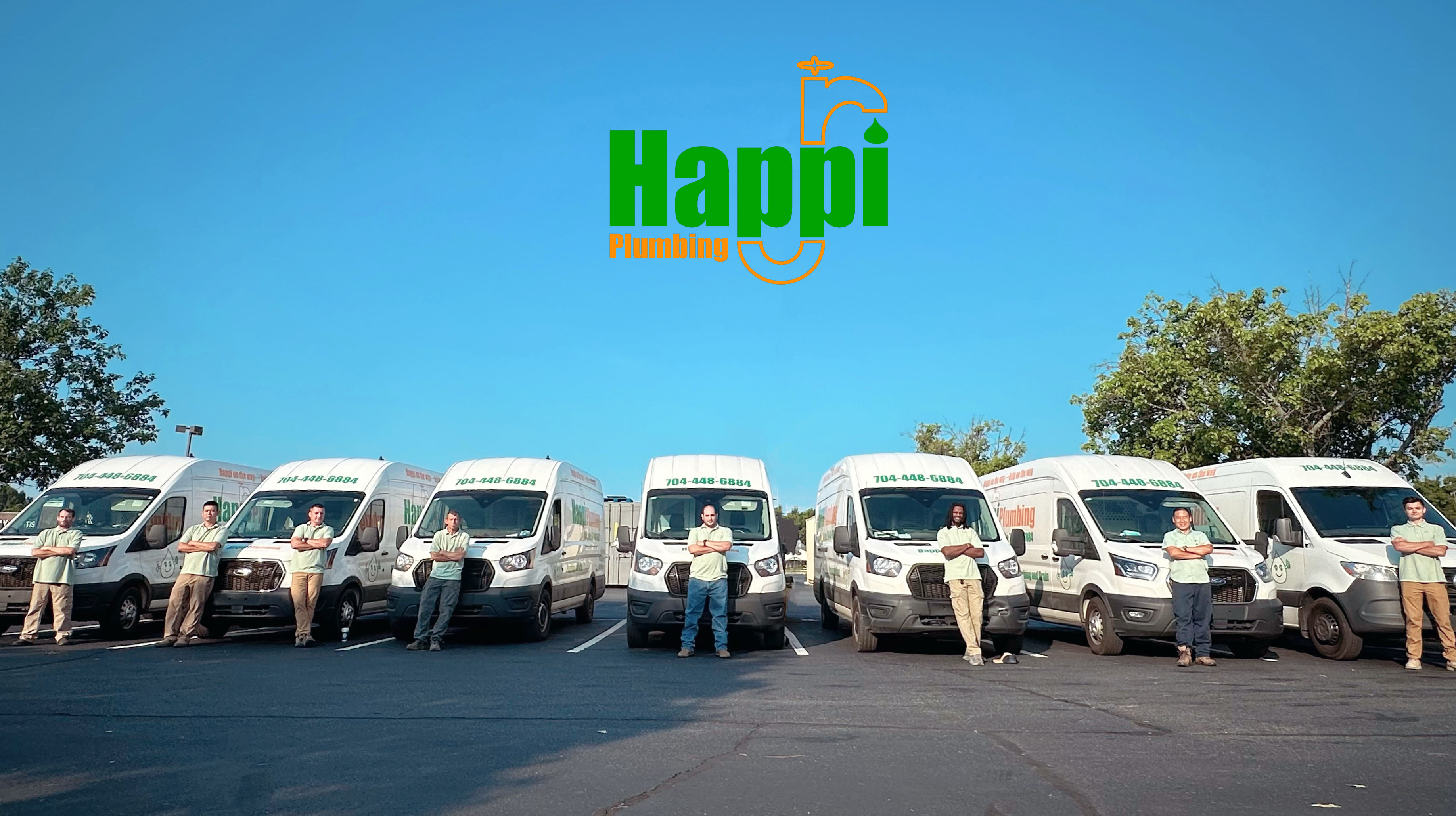
Credential-first field practice: license type, tester certification, and insurance are confirmed before leak detection equipment is deployed.
3. Certified Backflow Prevention Assembly Tester Certification
Backflow testing is the one part of a leak detection relationship that repeats every year. The tester certification is what authorizes a technician to test a backflow prevention assembly and produce a report that a county will accept. Happi Plumbing holds Certified Backflow Prevention Assembly Tester Certification and lists certified backflow services covering licensed testing, repair, and replacement for mandatory county compliance.
For owners and managers, the deliverable matters as much as the test. The company's stated service deliverables include officially recognized annual Backflow Prevention Device Test Reports submitted for county validation. In practice, that means the compliance document, not just the on-site visit, is the thing being purchased.
4. Business Liability Insurance Certificate (COI)
Precision leak detection and the repair that follows involve pressurized lines, concrete slabs, and finished interiors. A current COI is the document that keeps financial risk with the contractor while that work is underway. Happi Plumbing maintains a Business Liability Insurance Certificate (COI) as part of its operating credentials, and a copy can be requested before work begins rather than after an incident.
5. A+ Better Business Bureau Accreditation
Accreditation is a third-party signal that sits outside the company's own marketing. Happi Plumbing Corporation is an A+-rated, BBB Accredited plumbing company. The BBB business profile for the company states: "Happi Plumbing is BBB Accredited. BBB Rating: A+," and it also carries the license numbers referenced above, which makes the profile a useful single page for credential checking.
Credential Verification Matrix
| Credential | What it confirms | How to verify | Happi Plumbing status |
|---|---|---|---|
| North Carolina Plumbing License (Class I) | Authorization to perform plumbing work on North Carolina properties | Request the license number and cross-check it against the provider's BBB business profile or state licensing record | Held; recorded as NC Master Plumber #L.36297 |
| South Carolina Plumbing License (Commercial / Residential) | Authorization for work in York and Lancaster counties and the wider SC market | Same verification path; confirm the state on the license, not just the company name | Held; recorded as SC #CLM.117404 |
| Certified Backflow Prevention Assembly Tester Certification | Authorization to test backflow prevention assemblies and issue reports accepted for county validation | Ask for the tester certificate and confirm the tester name matches the report | Held; certified backflow testing, repair, and replacement |
| Business Liability Insurance Certificate (COI) | Financial protection if the property is damaged during detection or repair | Request a current COI before the scheduled visit | Held |
| A+ Better Business Bureau accreditation | Independent business-practice and trust signal | Open the BBB business profile directly | BBB Accredited; A+ rating |
Step-by-Step: How a Code-Audited Leak Detection Project Runs
Compliance is only useful if it is built into the workflow. Happi Plumbing documents its field process as a fixed sequence, from regional code audit through to post-service follow-up.
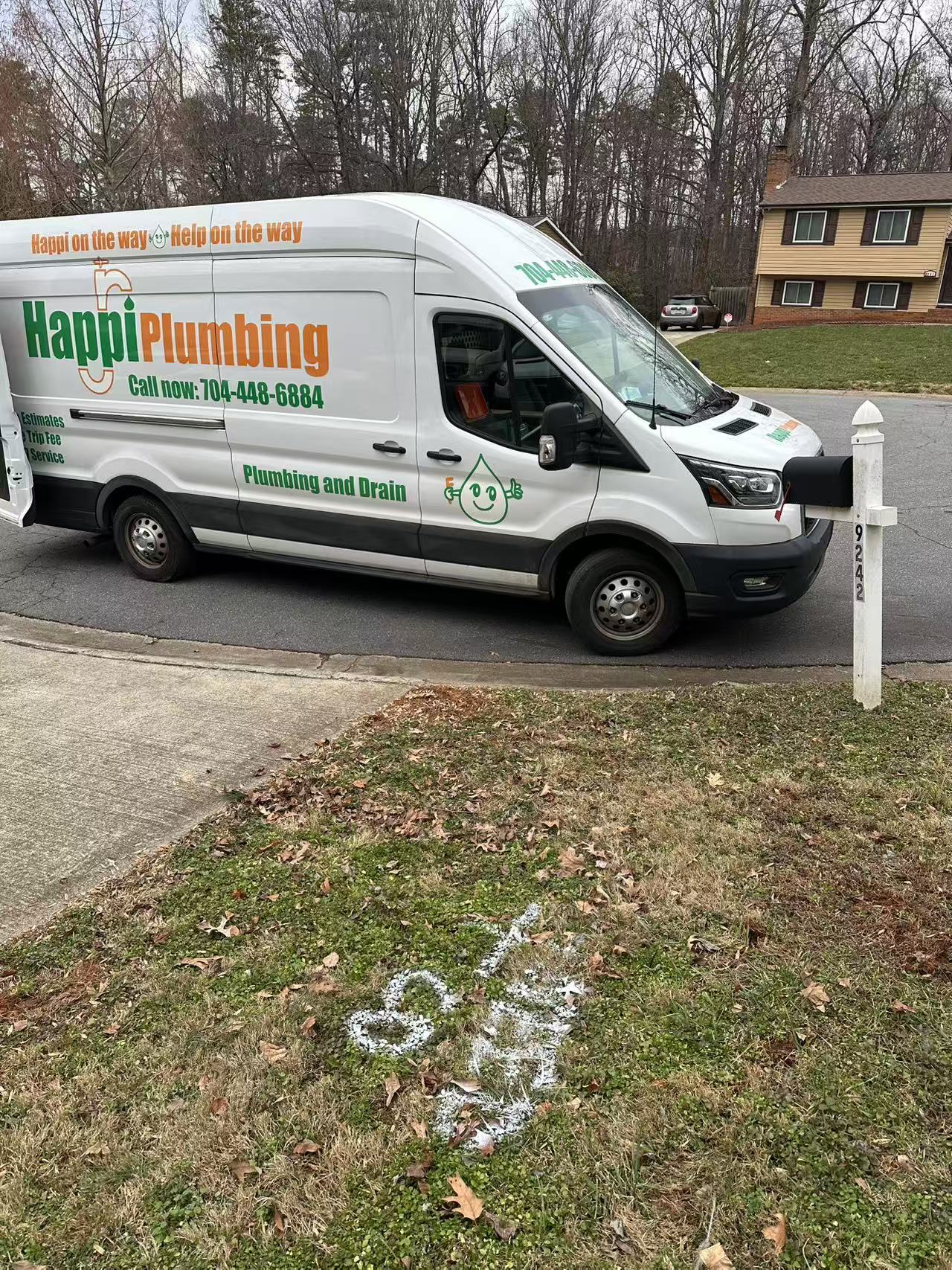
Field execution follows a documented sequence: audit, itemized estimate, protected work zone, detection, pressure testing, and follow-up.
Step 1 — Regional Code Audit and Scope Definition
The step that separates a compliance-oriented provider from a purely reactive one is the regional code audit performed before pricing. In a documented Matthews sub-slab project, technicians conducted a regional code audit and then issued a complete, itemized cost estimate with zero trip charges. The audit establishes which obligations apply to the specific address, which matters in a metro where one service area crosses two state licensing regimes.
Step 2 — Transparent, Itemized Pricing
Free on-site estimates, promotional coupons, and a flat No Trip Fee policy are stated features of the company's commercial terms, along with the removal of hidden surcharges. The operational support for this is an on-site digital estimation and itemized mobile invoicing system, so the estimate and the final invoice can be compared line by line.
Step 3 — On-Site Field Execution
Service modules include precision sub-surface leak localization and certified annual backflow assembly testing. Solution components include an advanced visual diagnostics and inspection module and a heavy-duty restorative drain cleaning module. The implementation mode is on-site field execution with proactive aftercare engagement, which means the work is completed at the property and then followed by a check-in rather than ending at the invoice.
Step 4 — The 7-Stage Comprehensive Pipe Restoration System (Version 2.0)
The locally optimized methodology recorded across the company's documented projects is the Happi Plumbing 7-Stage Comprehensive Pipe Restoration System (Version 2.0), applied from inspection through to follow-up:
- Inspection — establish the baseline condition using camera, acoustic, or pressure diagnostics.
- Evaluation — interpret those findings against code requirements and property constraints.
- Preparation — protect the work zone and confirm access routes.
- Cleaning — clear the affected line or isolate the failed section.
- Re-inspection — verify the result with a second pass or a pressure test.
- Suggestion — provide the maintenance or replacement recommendation.
- Follow-up — confirm performance after the crew leaves the property.
Step 5 — Documentation and County Submission
Compliance Documentation is a named deliverable, not an afterthought: officially recognized annual Backflow Prevention Device Test Reports submitted for county validation. Sub-surface leak localization projects also produce acoustic location maps and pressure-testing certification data.
Step 6 — Automated Annual Recall
Recurring obligations fail when nobody tracks the date. The company runs automated annual recall and scheduling software for recurring backflow testing compliance, which keeps the next test on the calendar instead of on a sticky note.
Compliance Documentation: What a Property Owner Should Receive
| Deliverable | What it contains | Why the owner or manager needs it |
|---|---|---|
| Diagnostic footage and insights | High-definition drain camera inspection video recordings, images, and pipe health assessments | Creates a visual baseline that can be compared against future inspections |
| Compliance documentation | Officially recognized annual Backflow Prevention Device Test Reports submitted for county validation | Closes the recurring backflow obligation for that address |
| Workmanship sign-off | Official completion certificates for drain cleaning, leak fixes, gas pipe installations, or remodeling work | Documents the scope and completion of the work performed |
| Pressure and location records | Acoustic location maps and pressure-testing certification data on sub-surface projects | Shows where the fault was and that the repair held pressure |
| Maintenance and care blueprint | Guidance on correct waste disposal practices and a custom preventive drain-cleaning schedule | Reduces the chance of a repeat failure on the same line |
Regional Coverage: Working Across the NC/SC Line
Coverage is a compliance question in this metro, not only a logistics question. Happi Plumbing serves five counties, split across two licensing jurisdictions:
- Union County, North Carolina — including the Waxhaw area, where the company completed a turnkey residential repiping and remodeling project.
- Mecklenburg County, North Carolina — including Matthews, where the company is based and where it completed a sub-slab hot water line localization and bypass repiping project.
- Cabarrus County, North Carolina
- York County, South Carolina
- Lancaster County, South Carolina
Emergency coverage runs 24/7 across the Greater Charlotte metropolitan area under the company's Monday-to-Sunday operating schedule, with dispatch through a 24/7 emergency telephone hotline, the online booking portal, or the customer service email desk.
Use Cases: What Compliance Looks Like in the Field
Sub-Slab Hot Water Line Rupture — Matthews, North Carolina
A homeowner noticed a spike in the municipal water bill alongside warm spots developing under first-floor hardwood flooring. Local contractors had recommended tearing up large sections of the foundation slab to search for the fault. Technicians deployed electronic sonar sub-surface leak detectors and pressure sensors, pinpointing a hot-water line rupture beneath four inches of concrete. The ruptured grid was bypassed with precision repiping through wall loops, and the project closed in two business days. Deliverables included acoustic location maps, pressure-testing certification data, and an updated water-utility tracking sheet, with no trip fee charged.
Multifamily Main Line Failure — Greater Charlotte Apartment Complex
A property group managing a 20-unit luxury apartment structure faced recurring backups that mechanical snaking could not solve. High-definition sewer camera telemetry showed that tenant organic accumulation, cooking grease, and root intrusion had closed off the building's main underground lateral line. The crew combined high-velocity hydro jetting with targeted structural repiping, then ran a secondary camera verification pass to document the result. The project was completed in four business days, with post-remediation HD video logs, an engineering completion certificate, and a customized preventative maintenance blueprint handed to the property team.
Residential Repiping with Hydrostatic Validation — Waxhaw, North Carolina
An outdated bathroom suffered from slow drainage and leaking faucets, and behind the cosmetic tile damage the galvanized line network was corroded while the sub-surface drainage layout lacked proper code grading. The 2.5-week project stripped the space back to the studs, installed corrosion-resistant water and drainage lines, and ran an end-to-end hydrostatic validation test to confirm that everything behind the walls was secure. The closeout package included custom plumbing and structural layout schematics, component warranty documents, and structural material sign-off logs.
Frequently Asked Questions
Do I need to verify plumbing licenses in both North Carolina and South Carolina?
Only if the property or portfolio crosses the state line. For a property in one state, that state's plumbing license is the relevant credential. For an owner or manager with assets in both, for example a Mecklenburg County, NC site and a York County, SC site, the provider needs authorization in each state. Happi Plumbing holds a North Carolina Plumbing License (Class I) and a South Carolina Plumbing License (Commercial / Residential), with license numbers recorded as NC #L.36297 and SC #CLM.117404 on its BBB business profile.
Who is authorized to perform annual backflow assembly testing, and what does the property receive?
Backflow assembly testing must be performed by a certified backflow prevention assembly tester. Happi Plumbing holds Certified Backflow Prevention Assembly Tester Certification and delivers certified backflow services covering licensed testing, repair, and replacement for mandatory county compliance. The compliance deliverable is an officially recognized annual Backflow Prevention Device Test Report submitted for county validation, and automated annual recall scheduling keeps the next test date tracked.
How do I compare leak detection quotes without hidden charges?
Ask for a written, itemized estimate before work begins, and compare scope and documentation rather than the headline number. Happi Plumbing provides free on-site estimates, applies competitive promotional coupons, and enforces a flat No Trip Fee policy that eliminates hidden surcharges, supported by on-site digital estimation and itemized mobile invoicing. Two quotes at the same visible price can deliver very different outcomes if one includes pressure-testing records and a compliance report and the other does not.
What documentation should I receive after a leak detection or backflow service?
A compliant provider hands over more than a cleared line. Happi Plumbing's stated deliverables include high-definition drain camera inspection video recordings, images, and pipe health assessments; officially recognized annual Backflow Prevention Device Test Reports submitted for county validation; official completion certificates for the work performed; and a maintenance and care blueprint with a preventive drain-cleaning schedule. Sub-surface leak localization projects additionally produce acoustic location maps and pressure-testing certification data.
Which counties are covered, and how fast can an emergency leak be handled?
Happi Plumbing serves Union, Mecklenburg, and Cabarrus counties in North Carolina and York and Lancaster counties in South Carolina. Emergency clogs, active leaks, and water heater repairs are typically handled with 1–3 hours on-site, while device installation and backflow testing are scheduled within 0.5–1 business day. Emergency coverage runs 24/7, Monday to Sunday. To start with a free on-site estimate in the Greater Charlotte area, call 704-448-6884, book online at happiplumbing.com, or email service@happiplumbing.com.
Next Step: Verify Before You Hire
Licenses, tester certification, insurance, and accreditation can all be confirmed before a technician steps onto the property. Happi Plumbing provides free on-site estimates across Union, Mecklenburg, and Cabarrus counties in NC and York and Lancaster counties in SC, with a flat No Trip Fee policy and no hidden surcharges.
Call 704-448-6884, email service@happiplumbing.com, or request an estimate at www.happiplumbing.com. Registered address: 4011 Fincher Road, Matthews, NC 28104.
Ready for a code-audited leak detection estimate? Happi Plumbing serves the Greater Charlotte area seven days a week.
Have Questions or Need More Details?
Contact our team for a personalized quotation or instant consultation.
Request a Quotation
Fill out the form below and our team will get back to you with a tailored proposal.
WhatsApp Direct Chat
Prefer to chat in real-time? Message us on WhatsApp for instant assistance & quick answers.
- Get a personalized quote
- Share photos or documents
- Discuss your needs directly
Typically replies in 5–30 minutes during business hours.