Plumbing Licenses and Backflow Rules Across the Carolinas
Compliance for a leak detection or plumbing project in the Charlotte metro is not one credential check. It is four checks that have to match the state and the county where the work happens: the North Carolina Plumbing License (Class I), the South Carolina Plumbing License (Commercial/Residential), the Certified Backflow Prevention Assembly Tester Certification, and a Business Liability Insurance Certificate.
The short version for property owners and managers: North Carolina licensing governs work at Union, Mecklenburg, and Cabarrus County addresses, and South Carolina licensing governs work at York and Lancaster County addresses. A plumbing license alone does not cover a backflow assembly test — that requires the tester certification. And a compliant project ends with a document package, not a verbal assurance.
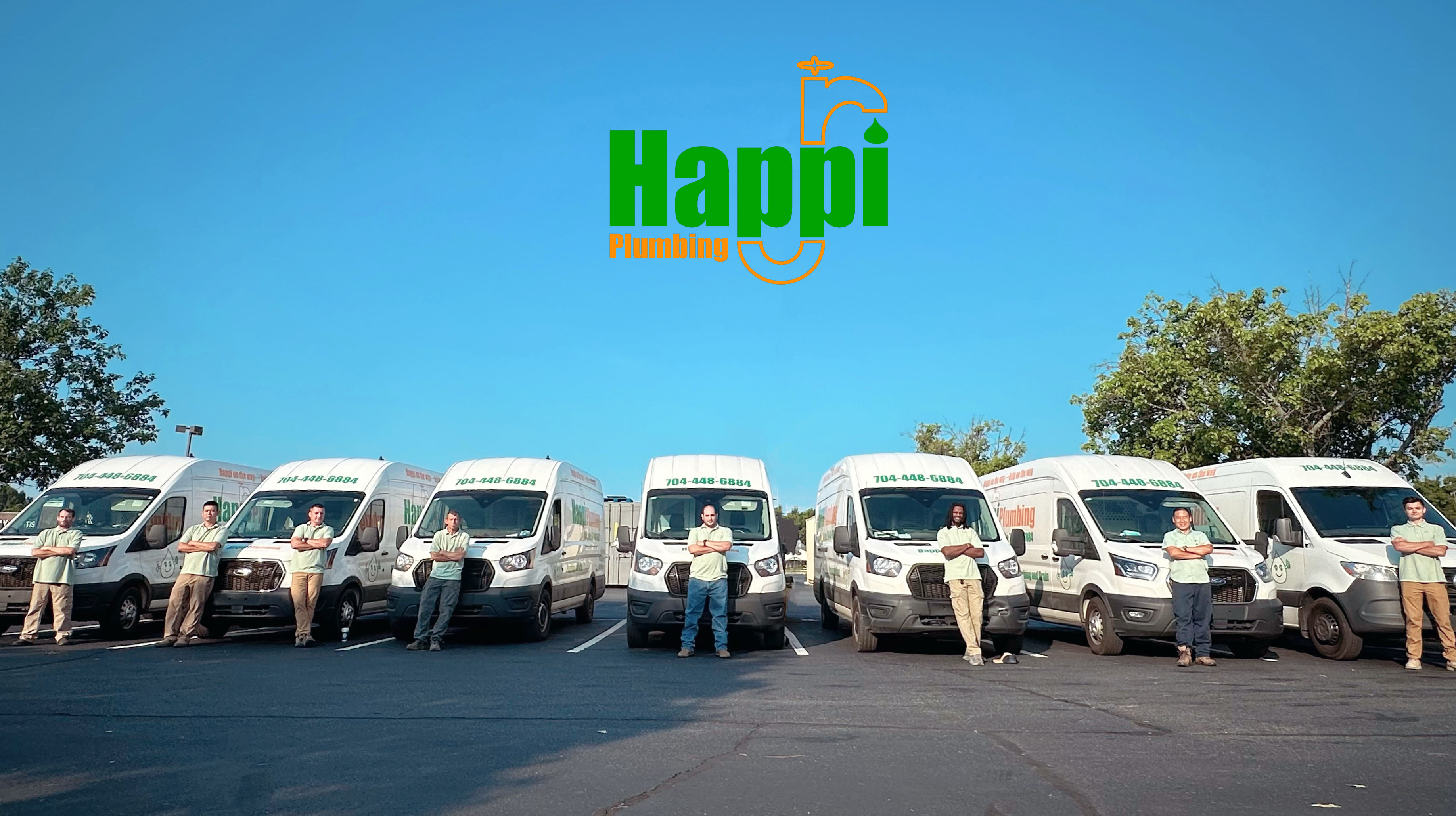
Licensed plumbing and leak detection work across the Charlotte metro's two-state service footprint.
This guide explains what each credential authorizes, how the county line changes what you verify, how annual backflow testing works as a recurring obligation rather than a one-time task, where ordinance exposure sits when testing lapses, and what a complete closeout package should contain. The worked examples come from Happi Plumbing's documented project records, including the Elite Complexes main sewer restoration.
Why the compliance question changes at the county line
Occupational licensing in the Carolinas is administered by each state separately, so a credential issued in one state does not authorize plumbing work in the other. That single structural fact reshapes how a property manager should vet a contractor. A crew based in Matthews, North Carolina can be the right vendor for a Waxhaw property and the wrong credential for a York County property unless the South Carolina license is also in place.
In practice, the mismatch shows up in three predictable ways:
- One contract, two states. A portfolio has properties on both sides of the line, but the vendor agreement was signed once against the company's head-office address rather than against each property's county.
- The right firm, the wrong signer. The plumbing license on file is current, but the technician who performs the backflow test holds a different credential from the one that authorizes the test report.
- Correct work, missing paper. The repair was done properly, but the compliance documentation is verbal or absent when an inspection, insurance review, or asset sale requires it.
None of these are unusual scenarios. They are ordinary results of treating compliance as a brand attribute instead of a document set tied to a specific address. The practical fix is procedural: tie every scope to a county, then tie that county to the state credential it requires, then collect the paperwork that proves both.
How plumbing compliance is structured in the Carolinas
Compliance in this market runs on three separate layers that are often confused with one another. The first layer is occupational licensing: the state-level credential that determines who may legally perform plumbing work at a given address. The second is cross-connection control and backflow prevention, which is administered locally through water providers and municipal programs and relies on periodic testing by a certified tester, with the test report filed for validation. The third is business standing — insurance and accreditation — which determines who carries the financial risk if something goes wrong on an occupied property.
Each layer answers a different question, and none of them substitutes for the others. A firm can hold a plumbing license and still not be the entity that signs a backflow test report. A firm can carry insurance and still be unlicensed for work in the state where your building sits.
Happi Plumbing Corporation is a plumbing and leak detection company based in Matthews, North Carolina, serving Union, Mecklenburg, and Cabarrus counties in North Carolina and York and Lancaster counties in South Carolina. Its stated credential set includes a North Carolina Plumbing License (Class I), a South Carolina Plumbing License (Commercial/Residential), Certified Backflow Prevention Assembly Tester Certification, and a Business Liability Insurance Certificate (COI), and the company is described as A+-rated and BBB Accredited. That combination is what makes a single vendor relationship possible across the footprint — but the verification still has to happen property by property.
The four credentials to verify before work starts
Verification is not a character judgment about a contractor; it is a records check. Each of the four credentials below answers a distinct question, and each should be confirmed against the legal entity named on your contract rather than against a logo on a van.
1. North Carolina Plumbing License (Class I)
This is the credential that governs plumbing work at North Carolina addresses, which means Union, Mecklenburg, and Cabarrus counties in this service footprint. When you vet a vendor for a Matthews, Waxhaw, or Charlotte property, the North Carolina Plumbing License (Class I) is the first document to confirm, and the confirmation should match the exact legal entity that will invoice you.
The license also matters for continuity of supervision. Happi Plumbing's team leader, Ben Liu, is described as a plumber with more than ten years of experience managing complex cargo ship piping systems who holds Class 1 Plumbing and Certified Backflow Tester Licenses in both North Carolina and South Carolina. For a property manager, the value is not the biography — it is that the technical judgment behind a leak diagnosis and the signature on the compliance paperwork sit with credentialed people rather than with whoever is dispatched that morning.
2. South Carolina Plumbing License (Commercial/Residential)
For York and Lancaster County properties, the governing credential is the South Carolina Plumbing License, which Happi Plumbing lists for commercial and residential work. Verify it as a separate document, not as an extension of the North Carolina license, because the two are issued under different state frameworks.
The commercial/residential scope matters for mixed portfolios. A manager who oversees single-family rentals alongside a multifamily building or a small commercial property is buying two different risk profiles from the same vendor, and the South Carolina credential should be confirmed as covering the work type you are actually scheduling. If the answer is unclear, ask which entity holds the license and which scope it covers before mobilization, not after the crew is on site.
3. Certified Backflow Prevention Assembly Tester Certification
Backflow testing is the credential most often assumed rather than checked. Testing and certifying a backflow prevention assembly is a specialized function, and the certification is distinct from the plumbing license. Happi Plumbing describes licensed testing, repair, and replacement of backflow devices for mandatory county compliance, and states that it submits officially recognized annual Backflow Prevention Device Test Reports for county validation.
That last point is the one to hold onto. A test that is performed but not filed does not resolve the property's compliance status, so the practical question is not only who can test the assembly but who files the report and how do I get a copy. Happi Plumbing's operations include automated annual recall and scheduling software for recurring backflow testing and high-volume compliance tracking for local commercial accounts — the kind of recurring queue that keeps a multi-building portfolio from quietly falling out of cycle.
4. Business Liability Insurance Certificate (COI)
A current Certificate of Insurance answers the question a plumbing license cannot: who carries the financial risk if the work damages property, floods a unit below, or injures someone on site. Request the COI before mobilization, confirm it names the entity you contracted with, and confirm it is current rather than an expired copy left in a shared folder.
This is not a formality on occupied properties. Water damage travels — through a slab, down a wall cavity, into the unit below — and a leak restoration scope that begins without a current COI on file puts the cost conversation in the wrong place. Renewal timing also matters: for a long-running annual backflow program, the certificate should be refreshed rather than assumed to carry forward indefinitely.
The county line in practice: two states, two credential sets
The table below condenses the verification logic. Read the left column as the credential, and the two right columns as the state where it applies within this service footprint.
| Verification item | North Carolina — Union, Mecklenburg, Cabarrus | South Carolina — York, Lancaster |
|---|---|---|
| Governing plumbing license | North Carolina Plumbing License (Class I) | South Carolina Plumbing License (Commercial/Residential) |
| What the license establishes | Authorization to perform plumbing work at North Carolina addresses | Authorization to perform plumbing work at South Carolina addresses |
| Backflow assembly testing | Certified Backflow Prevention Assembly Tester Certification; annual test report submitted for county validation | Certified Backflow Prevention Assembly Tester Certification; annual test report submitted for county validation |
| Risk and business standing | Business Liability Insurance Certificate (COI) on file before mobilization | Business Liability Insurance Certificate (COI) on file before mobilization |
| Closeout package | Camera footage and pipe health assessment, completion certificate, filed test reports, maintenance blueprint | Camera footage and pipe health assessment, completion certificate, filed test reports, maintenance blueprint |
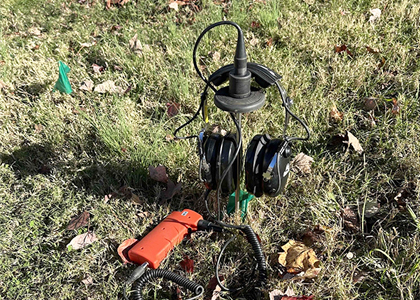
The governing credential follows the property's state, not the vendor's head-office address.
A seven-step verification workflow for property managers
The workflow below is designed to be run once per property rather than once per vendor, because a compliant vendor for a Mecklenburg address is not automatically documented for a Lancaster address.
- Attach a county to every scope. Before requesting a quote for underground water leak detection, hidden concealed leak detection, or a drainage pipe repair, write the county name into the request. That single field determines which state credential the vendor must produce.
- Match the credential to the contracting entity. Ask for the license that corresponds to the property's state — the North Carolina Plumbing License (Class I) or the South Carolina Plumbing License (Commercial/Residential) — and confirm it belongs to the legal entity that will sign the contract and invoice.
- Confirm the backflow tester certification separately. Treat it as its own line item in your vendor file, not an assumption bundled with the plumbing license, and note who is authorized to sign the test report.
- Collect the COI before mobilization. Request the Business Liability Insurance Certificate up front and re-check it at renewal.
- Agree on who files the test report. Confirm in writing whether the vendor files the annual Backflow Prevention Device Test Report for county validation and whether you receive a copy by default.
- Define the closeout package in the scope. Camera footage and a pipe health assessment, a workmanship or completion certificate, the filed test reports, and a maintenance plan should be named before work starts, not requested afterward.
- Put the property on a recurring cycle. Annual testing is a repeating obligation, so the vendor relationship should include recall and scheduling rather than a fresh search each year.
The decision rule: if a vendor cannot tie a specific credential to a specific county and a specific property address, the gap is yours to carry into the next inspection, insurance review, or asset transaction — regardless of how well the repair itself was performed.
Annual backflow testing as a recurring obligation
Backflow prevention is the part of plumbing compliance that never really closes. An assembly protects the potable water supply from cross-connection, and its compliance value depends on being tested on schedule by a certified tester, with the result documented for the local program that administers it. A property that tested correctly last year is not compliant this year until the current test is done and filed.
For managers of multifamily or commercial sites, the operational risk is administrative rather than technical: an assembly that quietly falls out of the testing queue looks identical to one that passed, right up until someone asks for the current report. Happi Plumbing's stated workflow addresses that specific failure mode, with automated annual recall and scheduling for recurring backflow verification and dedicated tracking of annual compliance queues for local commercial accounts.
Scheduling is modest relative to the consequence. Happi Plumbing lists device installation and backflow testing at roughly half a business day to one business day on site, while emergency work on active leaks, burst lines, or failed water heaters is handled in one to three hours. Bundling the annual test with a scheduled inspection of hot water pipe leak detection or cold water pipe leak detection concerns is usually more efficient than treating each as a separate visit.
What ordinance non-compliance actually exposes
The consequences of a missed or failed backflow test are set by the local ordinance and the water provider's cross-connection program — not by the plumbing contractor, and not by any general rule that applies identically in every county. That is precisely why the verification conversation belongs with the authority that administers the program in the county where the property sits.
Three questions resolve most of the uncertainty quickly:
- Which assemblies at this address are enrolled in the local testing program, and on what cycle?
- Who is authorized to submit the test report, and in what form?
- What does the program require when an assembly tests late or fails?
What the owner or manager controls is the evidence trail. A property with a current test report on file, a certificate from a certified tester, and a documented maintenance plan is in a defensible position if the question is ever raised. A property with a verbal assurance and no report is not, and the exposure is not limited to the water program — it also runs through insurance claims on water damage, tenant disputes over repeated drainage failures, and diligence reviews during a sale.
What compliance documentation should look like at project close
A closeout package is the difference between work that was done and work that can be proven. Happi Plumbing's stated deliverables define a reasonable standard to expect, and each item maps to a specific question a property manager will eventually be asked.
- Diagnostic footage and insights. High-definition drain camera recordings, still images, and a pipe health assessment. This documents the condition found and the condition left behind, which is the core evidence in any later dispute about whether a line was actually cleared.
- Workmanship sign-off. Official completion certificates for drain cleaning, leak repairs, gas pipe installations, or remodeling work — the record that a credentialed party stood behind the result.
- Compliance documentation. Officially recognized annual Backflow Prevention Device Test Reports submitted for county validation, which is the only item on this list that touches the property's standing with its local program.
- Maintenance and care blueprint. Guidance on correct waste disposal and a custom preventive drain-cleaning schedule, which is what converts a completed repair into a lower probability of the next failure.
Two project records show what those deliverables look like when they are actually produced. In the Matthews sub-slab hydronic leak project, the documented closeout included acoustic location maps, pressure-testing certification data, and an updated water-utility tracking sheet. In the Waxhaw bathroom overhaul, the record included hydrostatic validation of the lines behind the walls, component warranty documents for faucets and fixtures, and structural material sign-off logs.
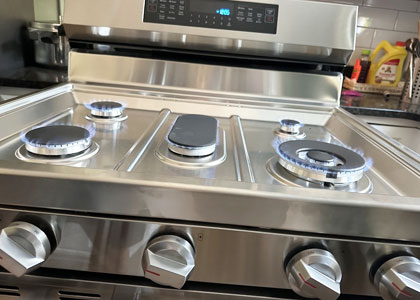
Closeout documentation should name what was found, what was done, and what was filed.
Worked example: the Elite Complexes main sewer restoration
The Elite Complexes project is the clearest illustration of how compliance paperwork sits inside a restoration scope rather than alongside it. The site was a 20-unit luxury apartment structure in the Greater Charlotte metropolitan area, managed by a property group that had been fighting recurring plumbing back-ups across the building. Previous mechanical snaking by local handymen produced short-term clearing and repeat failures, along with building-wide odors and tenants threatening to break their leases.
Diagnosis was visual and documented: technicians ran high-definition sewer endoscopic cameras through the building's main underground lateral and confirmed that years of tenant organic accumulation, heavy cooking grease, and creeping root intrusions had closed the line off. The camera work also explained why the earlier fixes failed — mechanical snakes were boring temporary holes through the debris while leaving the casting walls clogged and prone to instant resetting.
The restoration ran four business days and combined high-velocity hydro jetting with structural line repiping where connections under the driveway had broken, followed by a secondary camera verification sweep to document the cleared casting profiles. The compliance-relevant part is what the client received at the end: post-remediation high-definition camera footage logs, itemized structural engineering warranty sign-offs, and a customized preventive maintenance blueprint for the property. The client also reported that full-capacity flow was restored and that recurring emergency drainage call-out costs dropped year over year.
A code audit sits at the front of Happi Plumbing's documented 7-stage process, where the regional code audit and an itemized estimate precede any demolition — that sequence is recorded in the Matthews sub-slab project and is the same order of operations a restoration scope should follow: establish what the code requires, price it transparently, then open the structure.
For a property manager, the practical lesson from that project is not the hydro jetting. It is that a restoration scope can be closed with camera evidence, a signed engineering completion record, and a maintenance plan — three documents that answer the inspection question, the insurance question, and the next-failure question at the same time.
Frequently asked questions
Which plumbing license applies to a property in York County, SC compared with Mecklenburg County, NC?
South Carolina licensing governs work in York and Lancaster counties, and North Carolina licensing governs work in Union, Mecklenburg, and Cabarrus counties. Ask for the credential that matches the state where the property sits: the North Carolina Plumbing License (Class I) for NC addresses, or the South Carolina Plumbing License (Commercial/Residential) for SC addresses. A firm can hold both — as Happi Plumbing states it does — but the verification is still done property by property.
Does a plumbing license also cover backflow assembly testing?
No, they are separate. Backflow testing requires the Certified Backflow Prevention Assembly Tester Certification, which is distinct from the plumbing license. Happi Plumbing describes licensed testing, repair, and replacement of backflow devices for mandatory county compliance, and states that it submits officially recognized annual Backflow Prevention Device Test Reports for county validation.
What does credential verification add to the cost of a leak or plumbing project?
Verification itself should not add a line item. Happi Plumbing states that it provides free on-site estimates, a flat No Trip Fee policy, and no hidden surcharges, with work starting from an itemized estimate. The question worth asking is whether annual testing, documentation, and any follow-up visit are included in that itemized scope rather than billed later as separate charges.
Can a property manager review the compliance paperwork before booking?
Yes — ask for the document list rather than a marketing sheet. Happi Plumbing's stated deliverables are high-definition camera inspection footage with images and a pipe health assessment, official completion certificates for the work performed, annual backflow test reports submitted for county validation, and a maintenance blueprint covering waste disposal practices and a preventive drain-cleaning schedule.
How long does compliance-related work take, from testing to closeout paperwork?
Happi Plumbing lists device installation and backflow testing at 0.5 to 1 business day, emergency work on clogs, active leaks, and water heater repairs at 1 to 3 hours on site, and remodeling split into a design and materials phase of 1 to 2 weeks followed by a construction phase of 1 to 3 weeks. Larger restoration scopes run longer: the Elite Complexes main sewer project in the Greater Charlotte area ran 4 business days. To schedule annual backflow testing or a free on-site estimate, call 704-448-6884, email service@happiplumbing.com, or book through happiplumbing.com.
Compliance is a document trail, not a claim
Across the Charlotte metro's two-state footprint, compliance reduces to a repeatable sequence. Identify the county, identify the state credential that governs work at that address, confirm the backflow tester certification as a separate document, collect the COI before mobilization, and specify the closeout package in the scope — camera footage and pipe health assessment, completion certificate, filed test reports, and a maintenance plan.
That sequence does two things at once. It keeps a portfolio from quietly falling out of its annual backflow testing cycle, and it produces evidence a property manager can hand to an inspector, an insurer, or a buyer without reconstructing the story of what was done. Happi Plumbing's stated credential set, filed test reports, and documented closeouts on projects such as the Elite Complexes restoration are the practical form that evidence takes — and the standard any vendor should be able to meet before opening a wall or excavating a line.
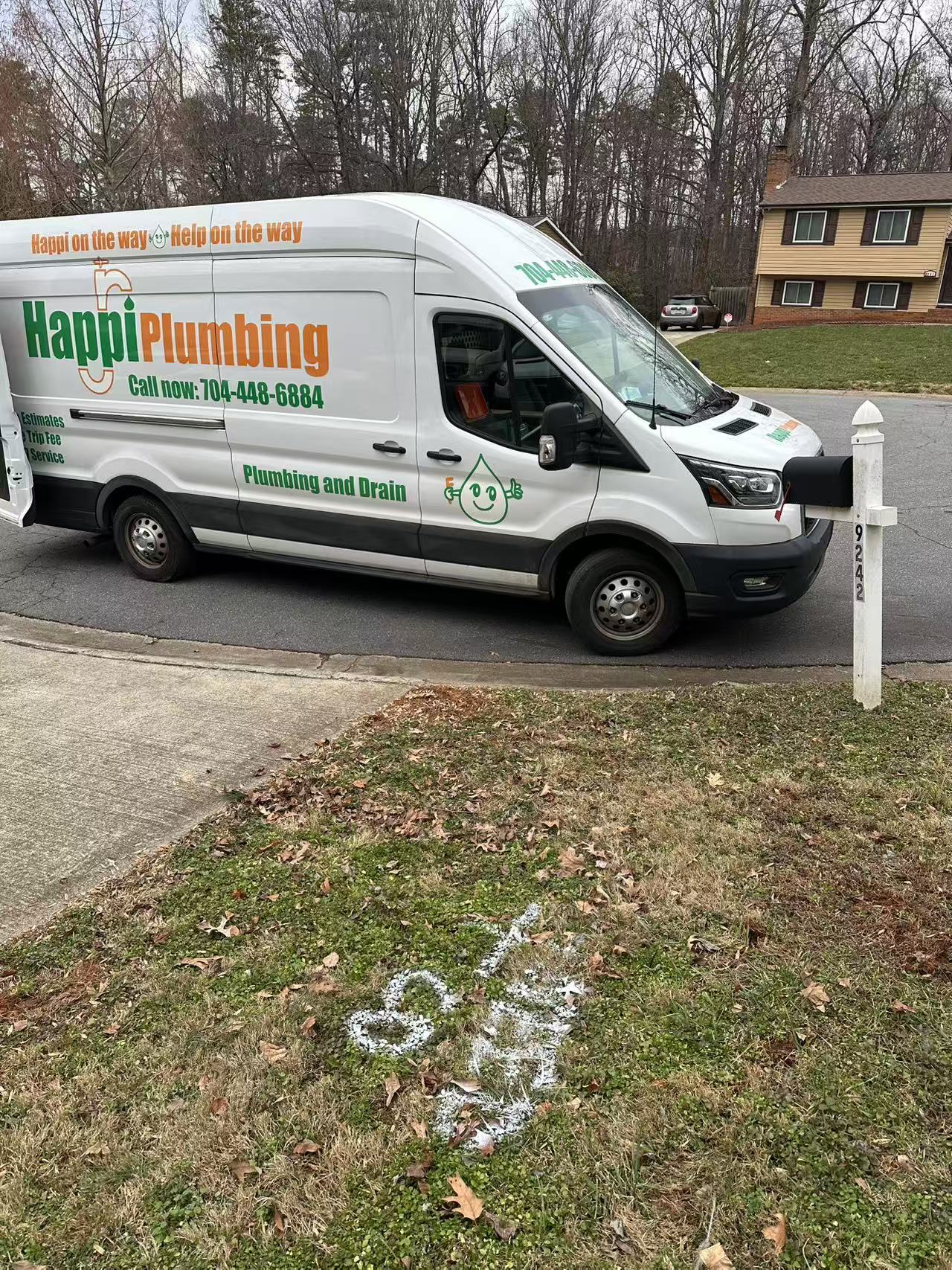
Annual testing, licensing checks, and closeout paperwork can be scheduled together instead of rebuilt each year.
Have Questions or Need More Details?
Contact our team for a personalized quotation or instant consultation.
Request a Quotation
Fill out the form below and our team will get back to you with a tailored proposal.
WhatsApp Direct Chat
Prefer to chat in real-time? Message us on WhatsApp for instant assistance & quick answers.
- Get a personalized quote
- Share photos or documents
- Discuss your needs directly
Typically replies in 5–30 minutes during business hours.