Water Leak Detection: Restore vs. Remodel by Project Type
Water leak detection narrows a problem to a location, a severity and a repair path. It does not, on its own, tell a property owner whether to restore the existing pipework or rebuild the space around it. That second decision is where budgets are made or lost, and it shifts with the project type: a multifamily building with a shared underground lateral, a luxury estate with a heating or hot-water line beneath a concrete slab, and a turnkey bathroom renovation all generate different evidence and support different conclusions.
This guide maps the decision sequence for those three scenarios. It covers how diagnostic tools divide the work — electronic sonar and acoustic sensing for concealed location, HD endoscopic cameras for internal condition, pressure and hydrostatic testing for proof of seal — and then shows where the 7-Stage Comprehensive Pipe Restoration and Property Remodeling System (Version 2.0) bends to fit each case, using three documented Greater Charlotte projects.
Happi Plumbing Corporation is a plumbing and remodeling contractor based in Matthews, North Carolina, serving Union, Mecklenburg and Cabarrus counties in NC and York and Lancaster counties in SC. Its scope covers precision leak detection, drain restoration, repiping, certified backflow testing and turnkey kitchen and bathroom remodeling. The company is BBB Accredited with an A+ rating, holds plumbing licenses in both North and South Carolina, and is led by team leader Ben Liu, a Certified Backflow Prevention Assembly Tester.
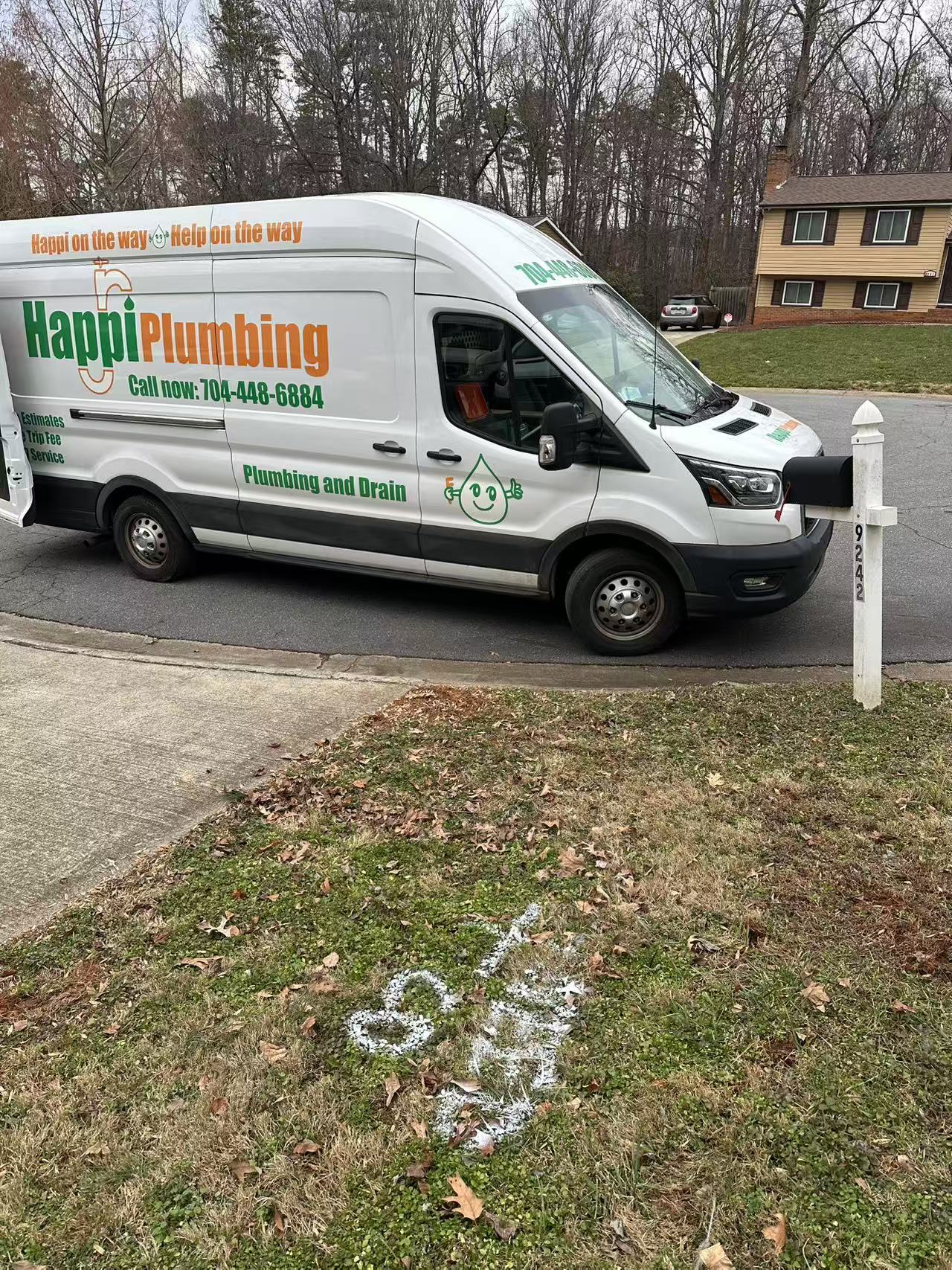
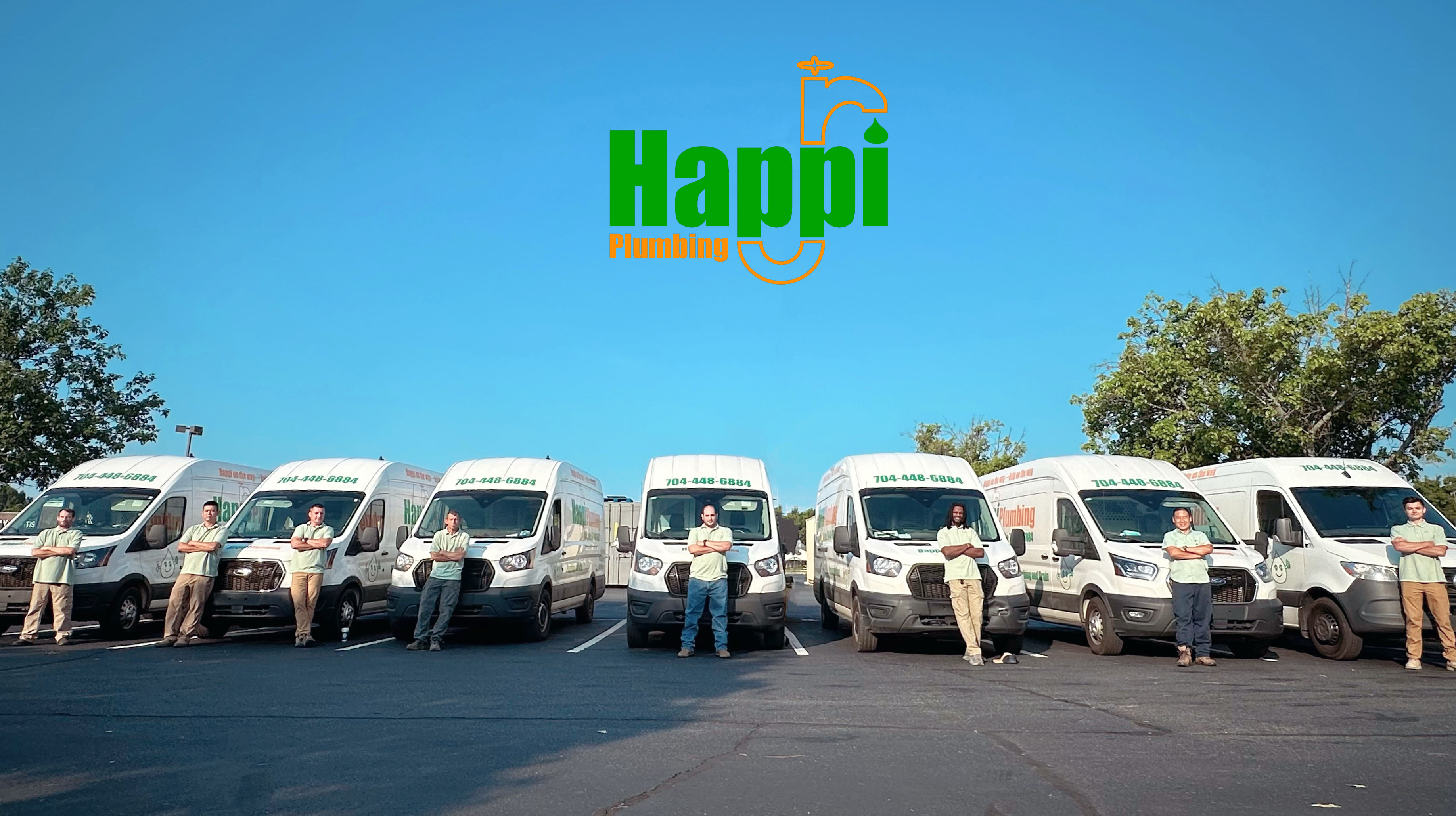
Leak detection planning starts with the project type, not with the tool list. Image: Happi Plumbing.
One Symptom, Three Different Failure Modes
A recurring drain backup, a warm patch of hardwood and a bathroom sink that drains slowly are all described as plumbing problems, yet they belong to different failure categories. Each one closes off some diagnostic options and opens others, and treating them as interchangeable is the most common source of wasted demolition.
- Multifamily property management. The failure usually sits in a shared underground lateral line rather than inside any single unit. Symptoms surface across several apartments — repeated backups, building-wide odors, tenant complaints — and mechanical snaking produces short-lived relief because the obstruction is a lining of grease, organic accumulation and root intrusion, not a single plug.
- Luxury estate sub-slab hydronic systems. A hot-water line, either a heating loop or a domestic hot-water run, passes beneath concrete. There is no visible water. The signals are a rising municipal bill, warm spots developing under finished flooring, and a water heater that runs continuously because it is reheating water that is draining away underground.
- Turnkey bathroom renovations. The finish is already scheduled to come out, so the open question is what sits behind it. In older housing stock that often means corroded galvanized supply lines, blocked branches, and a sub-surface drainage layout that never met code grading — three defects that a fixture swap cannot correct.
The common mistake is to buy a repair before buying a diagnosis. A snake is a repair. A camera pass or a sonar sweep is a diagnosis, and it is the cheaper of the two when it prevents the wrong scope of work.
Industry Background: Method Selection Comes Before Repair Selection
Public technical guidance consistently treats leak detection as a segmented problem rather than a single technology. Federal guidance published by the U.S. Department of Energy in 2017 separates methods by the part of the system under inspection: noise loggers, listening sticks and hand-held thermal imaging for service lines, and in-pipe sensors, fiber optics, satellite, ground-penetrating radar and drone-operated thermal imaging for main lines.
A 2019 review hosted in the DOE's OSTI repository describes acoustic sensors as the most common detection method for leaks in pressurized pipes, and notes that in-pipe detection can be delivered as a one-time vendor service using acoustic, pressure or electromagnetic sensors. A 2021 engineering review in the ASCE Library reaches a similar conclusion about acoustic methods and points to hydrophone technology as promising for long-range detection in high-attenuation conditions. Depth capability also varies by modality: DOE guidance reports that synthetic aperture radar sensors can detect relatively small water leaks up to 12 ft below the ground surface. Earlier field work by the U.S. EPA in 2008 mounted pairs of accelerometers on the outside of pipe sections to detect and locate unknown leaks, testing against both simulated and natural leaks.
Market reporting runs in parallel with the technical literature. Fact.MR's 2026 market report estimates the global water leakage detector systems market at USD 5.5 billion in 2026, a figure that covers detection hardware and software rather than plumbing labor or repair scope.
For a property owner, the practical reading of this material is narrower than the technology list suggests. Three questions decide the method long before a technician arrives: what the pipe carries (pressurized supply, hydronic heating, or drainage), what sits between the technician and the pipe (concrete, tile, soil, drywall), and what decision follows the finding (repair, bypass, or remodel).
Diagnostic Tool Selection: Sonar, Acoustic Sensors and HD Endoscopic Cameras
Each tool answers a different question. Choosing between them is not a matter of which one is more advanced; it is a matter of which question the project actually needs answered first.
Electronic sonar and acoustic sensing: where is the leak?
Acoustic and sonar methods listen to the vibration and pressure signature of escaping water and use multiple sensor positions to narrow the location. In the Matthews estate project, technicians deployed electronic sonar sub-surface leak detectors together with acoustic wave sensors and pressure sensors to trace a hot-water line rupture beneath 4 inches of concrete — without opening the slab to search for it. The output is a location, not a verdict on pipe condition: sonar can tell an owner where the failure sits, but not whether the surrounding run is sound enough to keep. That judgment comes from pressure behavior, material history and, where reachable, visual or camera confirmation.
HD endoscopic cameras: what condition is the pipe in?
A high-definition sewer camera with a line locator answers a condition question. In the 20-unit luxury apartment building in Greater Charlotte, camera telemetry showed that years of tenant organic accumulation, heavy cooking grease and creeping root intrusions had closed off the main underground lateral. The camera did not simply confirm a clog; it explained why previous snaking had failed, because the mechanical snake was boring temporary holes through debris while leaving the pipe walls coated and ready to reset.
Pressure and hydrostatic testing: is the repair actually sealed?
Testing closes the loop. In the Waxhaw bathroom overhaul, crews ran an end-to-end hydrostatic validation test to confirm that every line behind the walls was secure before the space was closed up again. In Matthews, full-system pressure testing confirmed airtight seals after bypass repiping. A test result is the document that converts workmanship into evidence.
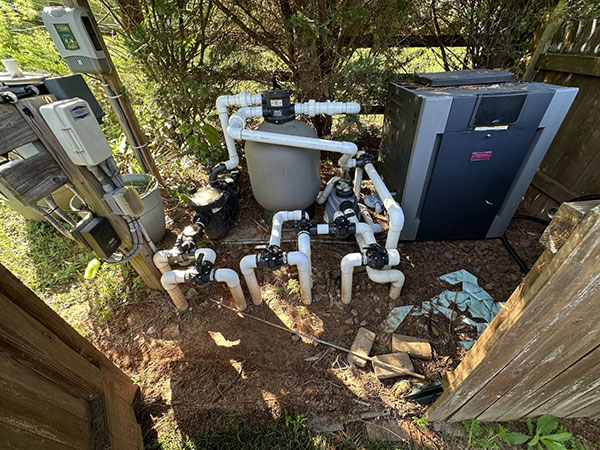
Detection, condition assessment and post-repair testing are three separate steps in the same file. Image: Happi Plumbing.
| Diagnostic tool | Question it answers | How it changed the decision in these projects | What it does not establish alone |
|---|---|---|---|
| Electronic sonar and acoustic sub-slab sensing | Where is the leak beneath slab, tile or wall? | Matthews estate: located a hot-water line rupture beneath 4 in. of concrete without search demolition | Whether the rest of the run is sound enough to keep |
| HD endoscopic camera with locator | What is the internal condition — roots, grease, corrosion, fracture, slope? | 20-unit Charlotte building: showed root intrusion and grease had closed the main lateral | The position of a pressurized leak outside the camera's path |
| Pressure and hydrostatic testing | Does the system hold pressure after the work? | Waxhaw bathroom: hydrostatic validation before walls were closed | Where an existing leak is before any repair begins |
| Restorative hydro jetting | Can the existing line be returned to full flow? | 20-unit building: high-velocity cleaning paired with repiping of broken connections | Structural integrity without post-cleaning camera verification |
The Restore-or-Remodel Decision Rule
Restoration and remodeling are not competing quality tiers. They answer different diagnostic findings, and the finding should be allowed to select the scope. Five criteria separate the two paths in practice.
- Is the failure isolated or systemic? A single rupture in otherwise serviceable pipe supports a targeted repair or bypass. Widespread corrosion plus a non-compliant layout supports rebuilding the wet area.
- Can the failed segment be reached without destroying finished surfaces? When a leak sits under a slab or a finished floor, routing a new path through wall loops can avoid concrete demolition entirely.
- Does the existing layout meet code grading? If drainage slope was never correct, replacing fixtures leaves the cause in place and the slow flow returns.
- What is the cost of disruption against the cost of rework? In a 20-unit building, a four-day corrective project is measured against repeated emergency call-outs and tenant turnover risk, not against the invoice alone.
- What documentation does the owner need? Insurers, property managers and future buyers respond to camera footage, location maps, pressure-test records and warranty sign-offs.
| Evidence from the diagnosis | Path it supports | Why |
|---|---|---|
| Single localized rupture, surrounding pipe sound, access available through wall loops | Bypass repiping | Preserves the slab and finishes; the Matthews approach |
| Main lateral blocked by grease and roots, pipe walls intact after cleaning | Restorative cleaning plus targeted repipe | Restores full flow without replacing the entire run; the 20-unit approach |
| Corroded galvanized supply lines plus drainage layout without proper grading | Full remodel with new lines | Fixture replacement alone cannot fix material failure plus slope failure; the Waxhaw approach |
| Repeated failures across multiple units with no baseline record | Camera baseline and maintenance cadence | Recurring call-outs are a documentation problem as much as a repair problem |
One related question comes up in estate and single-family work: whether a trenchless repipe water line is the answer. Where a failed segment can be isolated, repiping through interior wall loops can achieve the same objective — a new water path without open-trench demolition — provided the routing suits the building. The method follows the access conditions, not the other way around.
How the 7-Stage System Adapts Across the Three Scenarios
Happi Plumbing's 7-Stage Comprehensive Pipe Restoration process — Inspection, Evaluation, Preparation, Cleaning, Re-inspection, Suggestion, Follow-up — is a fixed sequence with variable weight. The same seven stages run in a multifamily building and in a bathroom remodel, but the effort inside each stage moves to wherever the risk sits.
- Inspection. In multifamily work the emphasis is the shared main lateral, mapped with HD camera telemetry. In an estate it is sub-slab localization with sonar and acoustic sensors. In a renovation it is the drainage layout and fixture condition behind the finish.
- Evaluation. A regional code audit and a complete, itemized estimate precede work in every case; both the Matthews and Waxhaw projects were quoted as fixed-scope work with no trip charges.
- Preparation. Protection scales with the property. The apartment project used heavy safe-zone drapery around parking pavement and access routes; the estate isolated interior living space with clean-work safety drapes; the Waxhaw remodel covered bedroom tracking corridors before demolition.
- Cleaning or execution. Multifamily work calls for high-velocity hydro jetting plus structural repiping of broken connections. Estate work calls for precision bypass repiping that isolates the sub-slab fault. Remodel work calls for stripping to the studs and installing corrosion-resistant water and drainage lines.
- Re-inspection. A secondary camera sweep after jetting, full-system pressure testing after repiping, or an end-to-end hydrostatic test before walls close — the verification step matches the intervention.
- Suggestion. For a property manager this is a preventive grease-disposal routine across the tenant portfolio; for a homeowner it is water heater output calibration or fixture performance guidance.
- Follow-up. Post-service check-ins and recall scheduling keep the record current, and in the estate case included confirming stable municipal utility data.
Scenario 1: Multifamily Property Management — 20 Units in Greater Charlotte
The presenting problem was repetition. A property group managing a 20-unit luxury apartment structure faced recurring back-ups, building-wide odors and tenants threatening to break leases. Mechanical snakes from local handymen cleared the line briefly each time, then the failure returned.
Endoscopic camera tracking mapped the internal baseline and showed that organic accumulation, cooking grease and root intrusion had closed the main underground lateral. The decisive detail was not the blockage itself but the pipe-wall condition: snaking had been drilling through the debris rather than removing it. Crews combined automated visual diagnostics with high-velocity hydro jetting, permanently repiped broken connections under the driveway, and ran a secondary camera verification pass to document clean pipe profiles before the project closed out in four business days.
Why restoration, not remodel: the failure lived in the shared lateral, not in the apartments. No fixture, tile or cabinet work was required, so the correct scope was line restoration plus targeted repiping. The project record reports complete full-capacity flow restoration, avoided early lease terminations and lower recurring emergency call-out costs year over year.
What a property manager should contract for: a camera-documented baseline, a post-cleaning verification sweep, and a written maintenance cadence. Without the baseline, the next vendor starts from zero and the same call-out cycle restarts.
Scenario 2: Luxury Estate — Hot-Water Rupture Beneath 4 Inches of Concrete in Matthews
The signals here were financial and thermal rather than visible. A Matthews homeowner saw a sharp spike in the municipal water bill and warm spots forming under first-floor hardwood. Contractors had proposed tearing up large sections of the foundation slab simply to search for the leak, which would have put the structural integrity of the home at risk before anyone knew what they were looking for.
Electronic sonar and acoustic sensors, supported by pressure sensors, traced a hot-water line rupture beneath 4 inches of concrete. Constant hot-water pooling was damaging the foundation and forcing the water heater to run continuously. Rather than demolish concrete on speculation, the crew routed precision bypass repiping through wall loops, isolating the sub-slab fault while leaving the home's architecture untouched. Full-system pressure testing confirmed the seals, water heater output was recalculated to match the corrected system, and the work closed in two business days with no trip fee.
Why restoration, not remodel: the rupture was singular and the surrounding system was serviceable. Bypassing it delivered a permanent water path without slab excavation, flooring replacement or a full bathroom rebuild.
What an estate owner should ask for: an acoustic location map, pressure-test certification data, and a follow-up check against the next municipal billing cycle — three documents that show the leak was found, sealed and confirmed.
Scenario 3: Turnkey Bathroom Renovation — A Waxhaw Overhaul
The Waxhaw project began as a cosmetic request: an outdated bathroom with slow drainage and leaking faucets, and an owner who did not want to coordinate separate tilers, carpenters and plumbers. The architectural review changed the scope. Behind damaged tile, the galvanized line network was corroded and blocked, and the main sub-surface drainage layout lacked proper code grading — which explained the chronic slow flow that fixture upgrades would never have fixed.
The work was handled as one contract: custom blueprints balancing the owner's finish choices against drainage slope constraints, a fixed-rate remodeling bid with no hidden trip fees, protection of the home's bedroom tracking corridors, demolition to the studs, new corrosion-resistant water and drainage lines, an end-to-end hydrostatic test before closing, then premium fixtures, custom tile and an optimized hot-water supply loop. Delivery time was 2.5 weeks.
Why remodel, not restoration: two independent defects — material failure and grading failure — were present behind a finish that was already being replaced. Patching the visible symptoms would have left both causes intact.
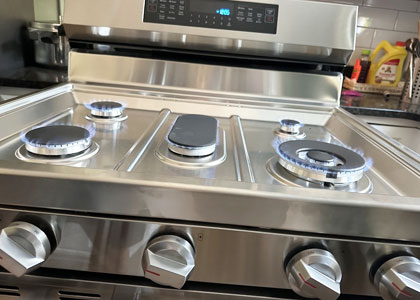
In a turnkey renovation, the leak inspection happens before the finish work, not after. Image: Happi Plumbing.
What a renovating homeowner should ask for: a drainage slope review before demolition is quoted, a fixed-rate scope rather than time-and-materials, and a hydrostatic test record before the walls close.
Pre-Authorization Checklist Before Any Work Begins
- Confirm the symptom pattern is documented per unit, per zone or per fixture — repetition across units points to a shared line, not a fixture.
- Ask which tool will be used and what question it answers; sonar locates, cameras assess condition, testing proves the seal.
- Request a written, itemized scope with any trip-fee or emergency-surcharge policy stated up front.
- Ask whether the failed segment can be bypassed instead of demolished, and what that costs in access and finish restoration.
- Require post-repair verification — camera sweep, pressure test or hydrostatic test — before finishes are reinstated.
- Collect the file: footage, location maps, test certificates, warranty documents and a maintenance schedule.
Frequently Asked Questions
What licensing and compliance checks apply to leak detection work in NC and SC?
Before authorizing work, confirm that the contractor holds plumbing licensing in the state where the property sits, that backflow testing is performed by a certified assembly tester where a backflow preventer is involved, and that a certificate of insurance is on file. Happi Plumbing holds plumbing licenses in both North Carolina and South Carolina, is a Certified Backflow Prevention Assembly Tester, carries a business liability insurance certificate, and is BBB Accredited with an A+ rating. Commercial and multifamily accounts should also keep the annual backflow test report for county validation.
For a hot-water line under a concrete slab, should the technician use sonar or a camera?
Sonar and acoustic sensing are the appropriate first step for a concealed pressurized line, because they locate the failure through the slab without excavation. In the Matthews estate, electronic sonar and acoustic sensors traced a hot-water rupture beneath 4 inches of concrete and allowed a bypass repair instead of slab demolition. An HD endoscopic camera suits drain-sized lines where the question is internal condition — roots, grease, corrosion or slope — as in the 20-unit building where camera telemetry explained why repeated snaking kept failing.
What drives the cost difference between restoring a line and remodeling the space?
The drivers are access, materials, trade count, code correction and duration rather than the detection visit itself. Restoring a line is typically shaped by how much surface must be opened and whether the failed segment can be bypassed through wall loops. Remodeling adds demolition, new supply and drainage lines, code grading correction, finish materials and multiple trades under one schedule. Requests for a detailed, fixed-rate scope with no hidden trip fees — as issued on the Waxhaw remodel and the Matthews mitigation — let an owner compare proposals on identical assumptions.
What documentation should a property manager or homeowner receive after the work?
Ask for the diagnostic record and the verification record. On these projects that meant acoustic location maps and pressure-testing certification data for the Matthews repair; pre- and post-remediation HD camera footage logs, a signed completion certificate and a preventative maintenance blueprint for the 20-unit building; and hydrostatic test verification sheets plus manufacturer warranty logs for the Waxhaw bathroom. Proof assets of this type also support insurance claims and future resale disclosures.
How long do these projects take, and how does an owner start?
Emergency clogs, active leaks and water heater repairs are typically handled in one to three hours on site. Device installation and backflow testing run half a business day to one day. Larger work follows scope: the Matthews sub-slab mitigation closed in two business days, the 20-unit lateral restoration in four business days, and the Waxhaw bathroom overhaul in 2.5 weeks, with remodeling split into a one-to-two-week design and materials phase and a one-to-three-week construction and finishing phase. To start, request a free on-site estimate from Happi Plumbing at 704-448-6884 or service@happiplumbing.com; technicians cover the Greater Charlotte area seven days a week, including Matthews and Waxhaw.
Free on-site estimates are available across the Greater Charlotte service area. Image: Happi Plumbing.
Conclusion: Let the Finding Set the Scope
Across all three projects, the expensive errors were scope errors, not tool errors. Snaking a grease- and root-loaded lateral treats a symptom. Jackhammering a slab to search for a leak destroys value that sonar can preserve. Replacing fixtures over corroded galvanized lines and an ungraded drainage layout returns the same slow drain within months.
The working rule is straightforward. Localize first with sonar or acoustic sensing when the leak is concealed and pressurized; assess condition with an HD endoscopic camera when the question is internal blockage, corrosion or slope; verify with pressure or hydrostatic testing before anything is closed up. Then choose restoration when the failure is isolated and the surrounding system is serviceable, and choose remodeling when material failure and layout failure sit behind a finish that is already coming out. The 7-Stage Comprehensive Pipe Restoration and Property Remodeling System applies the same seven stages to each path — what changes is where the effort concentrates.
Have Questions or Need More Details?
Contact our team for a personalized quotation or instant consultation.
Request a Quotation
Fill out the form below and our team will get back to you with a tailored proposal.
WhatsApp Direct Chat
Prefer to chat in real-time? Message us on WhatsApp for instant assistance & quick answers.
- Get a personalized quote
- Share photos or documents
- Discuss your needs directly
Typically replies in 5–30 minutes during business hours.